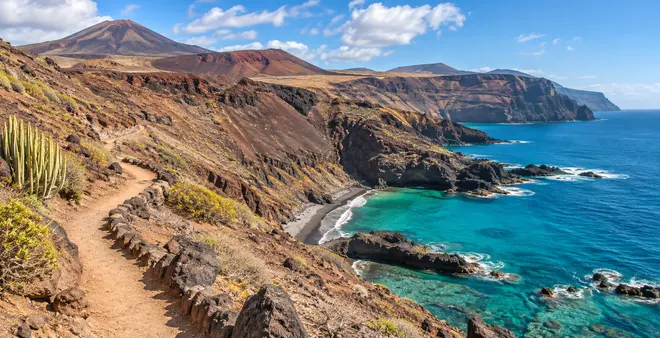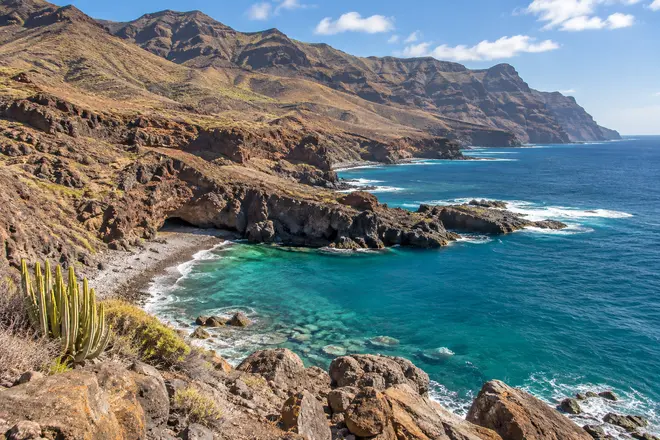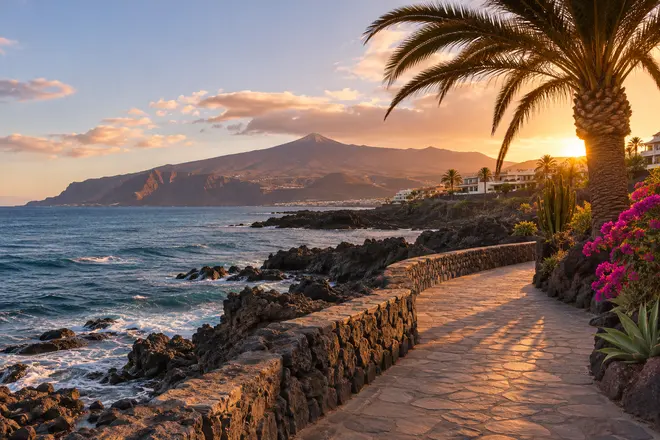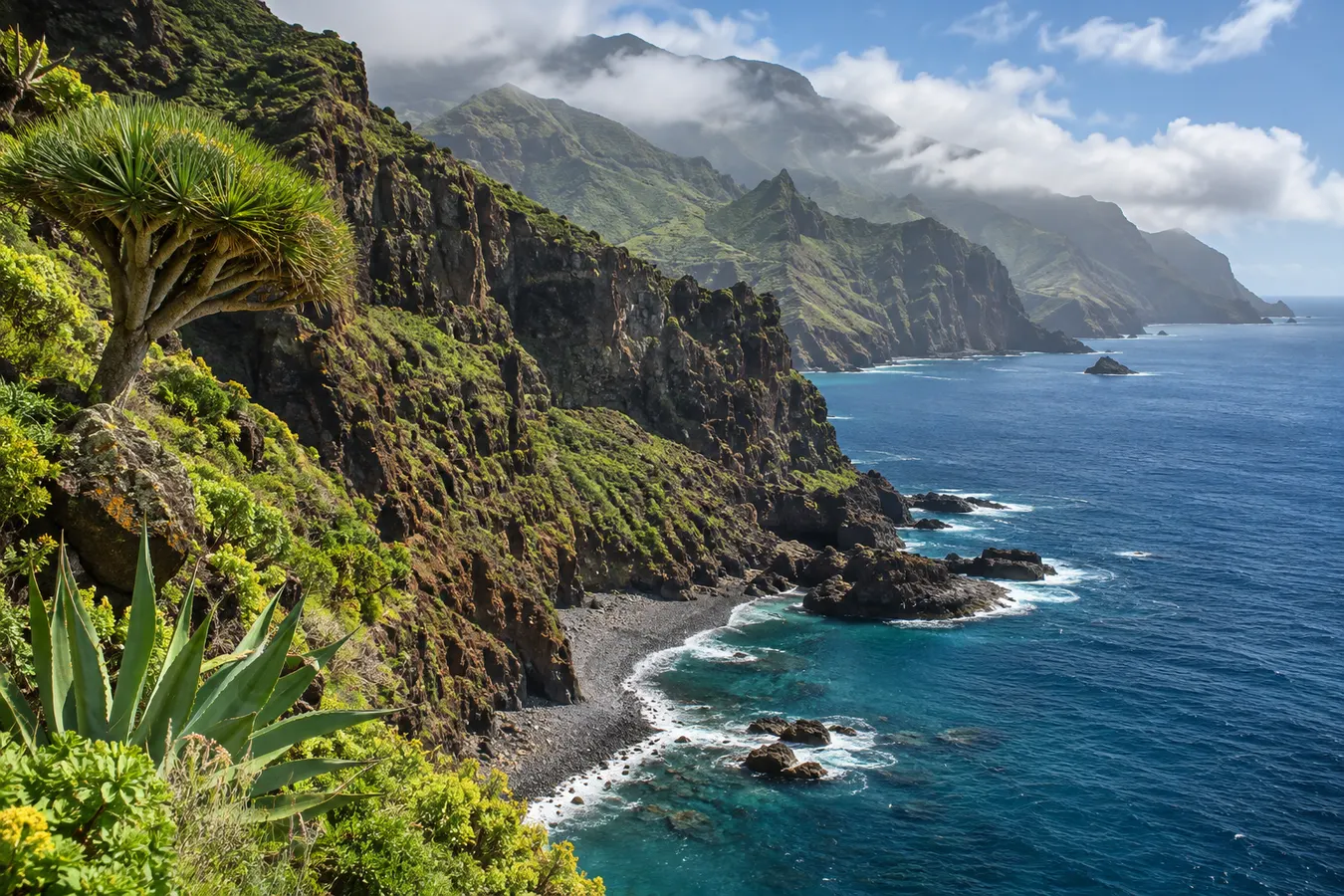
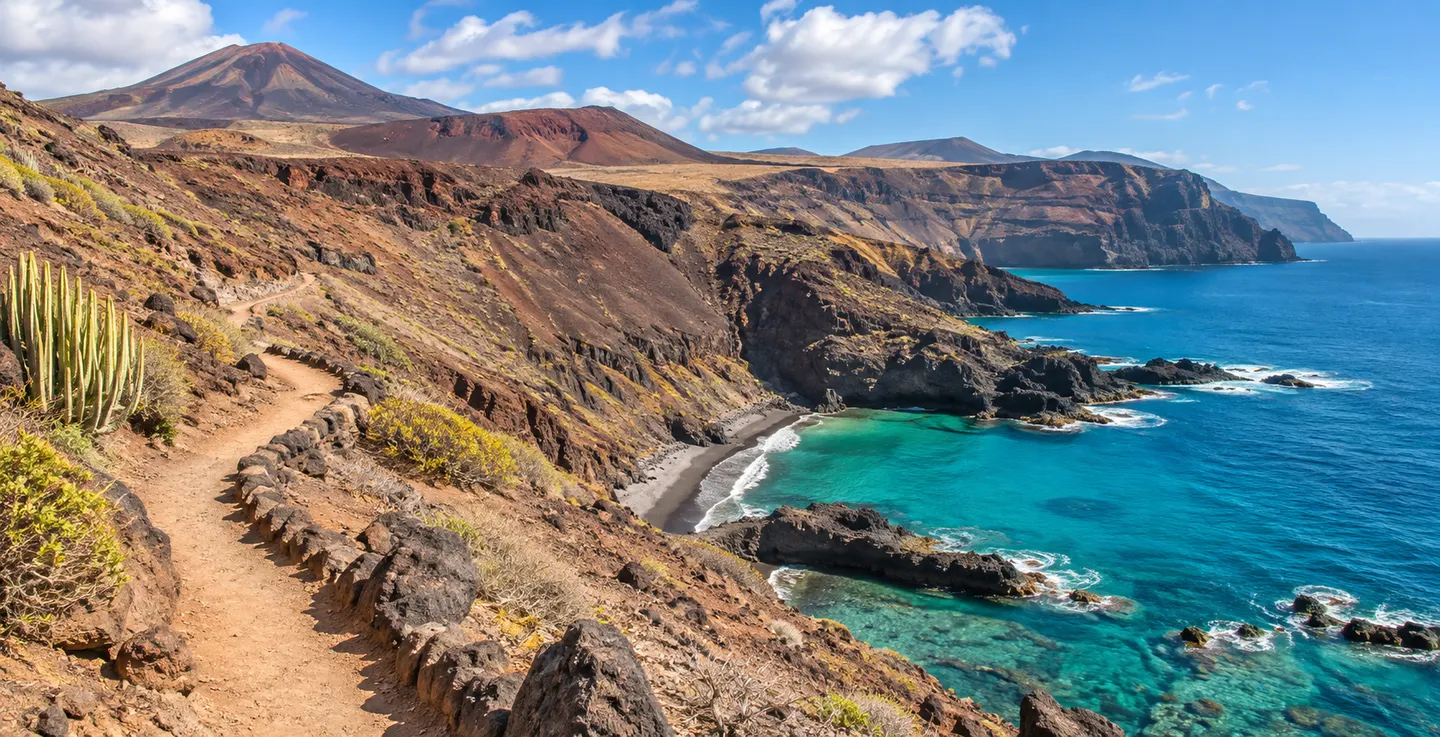
Approaching by sea from Tenerife, La Gomera appears as a territory of near-vertical slopes and deep grooves cut into the land. Ravines lead to small areas of coastline where settlements have developed. Just looking at that outline makes it clear that visiting the island requires a rather different approach to transport from many other beach destinations.
A holiday beside the sea in La Gomera can encompass a varied itinerary: a boat trip to look at the volcanic cliffs, swimming at a sheltered beach in suitable conditions, an introduction to kayaking with professional assistance, or long walks between the waterfront and the valley. The mountains are never far away, so it is worth allowing a few days to discover the interior as well.
Playa Santiago and the southern shore
Playa Santiago is situated near the island's airport on the southern coastline. The little town has developed behind its beach and retains a visible connection to fishing. The coastal promenade offers views of the dark pebbles by the water and the hillsides rising behind the houses.
Its location makes it a practical place to organise a marine activity, as it is easy to alternate time on the water with a meal, a rest or a walk around the town. When clear of suspended sediment, the water offers opportunities to see rocky seabeds from the surface in places where swimming is permitted and weather conditions are suitable.
For a snorkelling session, look at how you will get into and out of the water before putting on fins. An uncomfortable foothold on a pebble beach can quickly become a problem when a wave arrives. Beginners should find out about designated swimming areas and seek qualified assistance. There is no need to go any distance offshore to recognise various types of fish or appreciate the shapes of the volcanic rocks.
If kayaking interests you, find out which launch points are authorised and whether organised activities are taking place that day. The presence of a harbour does not make the harbour basin a free-for-all for paddlers. Local professionals understand the restrictions on access and the areas used by marine traffic.
Valle Gran Rey, a base for walking and looking out to sea
In the southwest, Valle Gran Rey brings together gardens, palm trees, neighbourhoods and beaches. The shape of the valley directs attention from the slopes towards the ocean. Accommodation can be found near La Playa, La Puntilla, Vueltas or the upper parts of the valley. Each has a different relationship to the sea and to paths heading further inland.
Vueltas beach adjoins the harbour and benefits from the shelter of a breakwater. The relatively sheltered nature of this area does not remove the need to check local signs and follow the advice of the authorities. It appeals to travellers who prefer a day without having to walk long distances between their accommodation, shops and the shore.
Related reading: Which Canary Island is best for a sea adventure holiday?.
Not all beaches in the surrounding area have straightforward access. The cliffs continue to change, rockfalls can happen and some locations are subject to restrictions. Do not bypass a closed path just because an old map shows a route to the beach. Neither is it advisable to follow boats as they leave the harbour, since they use dedicated channels and operating areas.
When the weather is unsuitable, exploring the neighbourhoods and appreciating the view from an authorised spot on the hillside can easily fill a morning. Sunset over the western horizon is an invitation to linger on land, not to set out on a water activity when daylight is disappearing.
Los Órganos, volcanic architecture facing the ocean
One of the most unusual landscapes in La Gomera occupies the northwestern coast. Los Órganos natural monument reveals a wall of rock columns descending along a cliff before disappearing below the waves. The shapes bear a striking resemblance to the pipes of a monumental organ.
The explanation lies in the cooling and contraction of a mass of magma. Over time, erosion exposed these remarkable prismatic structures. No readily accessible viewpoint on land provides a direct sight of the formation. As a result, visits are generally arranged through marine excursions from the main coastal destinations.
This is a destination for an appropriate vessel with an experienced crew. The shoreline is remote, exposed and difficult to reach. It is not a sensible target for an introductory kayak outing or an opportunity to improvise a route along the feet of cliffs. If sea conditions mean an excursion has to be cancelled, respect that decision rather than attempting to find another means of getting closer.
San Sebastián and the views towards Tenerife
San Sebastián de La Gomera is often the first taste of the island for visitors arriving on the ferry. The capital occupies the mouth of a ravine alongside the harbour. It offers an interesting first afternoon spent between the historical centre and the shore.
Near the beach at San Sebastián, the silhouette of Tenerife is visible on clear days. It is a reminder of the distances between the islands and the way the highest summits influence what can be seen from the ocean. The bay has an important port function, so areas used by motor vessels, passenger ferries and swimmers need to remain separate.
Anyone with limited time can make San Sebastián the first or last stage of the visit. To enjoy Valle Gran Rey or Playa Santiago at a leisurely pace, resist the temptation to fit every location into one day. A short distance on a map frequently involves a long stretch of winding road.
Combine coastal activities with Garajonay
The interior of La Gomera contains one of the most famous laurel forests in the Canaries. Moist conditions at higher elevations create a striking contrast between the woodland at Garajonay and the vegetation of the drier coastal ravines. You can leave a beach in bright sunshine and visit a trail surrounded by mist on the same day.
Plan a visit to the national park with suitable footwear, a light insulating layer, water and plenty of time to return. Choose open, signposted trails that match the ability of the group. There is no reason to commit to a long hike immediately after a physically demanding activity on the ocean.
This ability to alternate environments is particularly useful during a stay of several days. Coastal forecasts change, and the state of the sea may not correspond to the sky you see from your hotel terrace. Allowing a day for the forest and another for an inland village provides room for rearranging plans.
Preparing for a visit from Tenerife
The main ferry connection leaves Los Cristianos and arrives in San Sebastián. Before choosing dates, check the available sailings and allow time for transfers between the airport, harbour and your accommodation. If you intend to continue by car, check vehicle transport and the conditions attached to any car hire arrangement involving different islands.
For a short holiday it makes more sense to stay in one convenient location. Playa Santiago works well if you would rather be beside the southern shore; Valle Gran Rey if you also want to explore trails in the valley; San Sebastián if being close to the arrival port is important.
Before any ocean activity consult the marine forecast, avoid entering the water when warnings are in force, and use appropriate equipment. Seek professional assistance for a first sea kayaking experience and do not practise alone. Leave remote coastlines to specialists. La Gomera rewards travellers who take time to discover it: many of its finest views are available from an ordinary walk on land.
Explore next: Where to stay in Tenerife for active holidays.