When looking underwater in Tenerife, it is tempting to concentrate on the first colourful fish that comes into view. Spend a little longer watching the same spot and you will notice that each kind of animal uses the seabed in a different way. Some stay close to rocks, while others wait on sandy areas or move together through open water. The distribution of life across these spaces explains much of the marine diversity of the Canary Islands.
The archipelago lies in the eastern Atlantic, in a region where marine species associated with subtropical and temperate waters are both found. Volcanic islands create cliffs, rocky platforms and beaches, while below the water different communities occur according to the substrate, depth, light and movement of the sea. You cannot see them all in a short snorkelling session, but it offers an introduction.
Reading the rocky seabeds
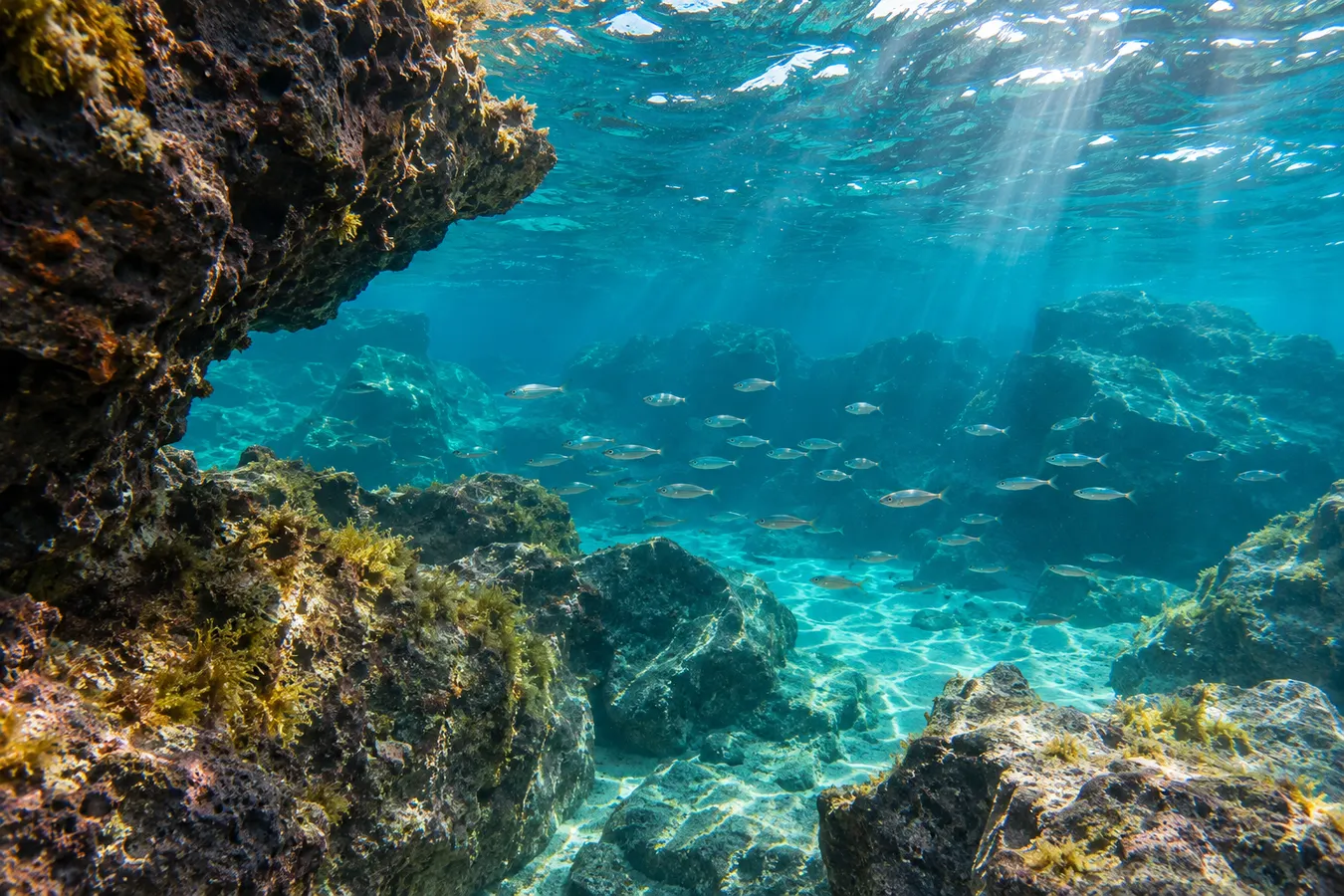
Submerged lava formations provide hard surfaces, crevices and small variations in elevation. Algae grow in illuminated areas, sometimes covering the rocks and giving the seabed brown, green or reddish hues. Numerous creatures find shelter within this growth, some too small to distinguish from the surface.
Damselfish are familiar inhabitants of many Canary Island coastal habitats. The bluefin damselfish, Similiparma lurida, has a compact body shape and can often be recognised by its dark colour, although age and illumination affect its appearance. It may be seen around rocks, where individuals use small parts of the environment.
The Mediterranean parrotfish, Sparisoma cretense, is particularly closely associated with the coasts of the Canary Islands. It belongs to the parrotfish family and has a jaw adapted to grazing on the substrate. Not all individuals have the same colouration. Some feature shades that are less conspicuous against the seabed while others stand out with red, yellow or grey markings.
Behaviour can offer just as many clues as colour. While some fish seem to move rapidly from one place to the next, others remain in the vicinity of a particular surface, repeating short movements. You do not need to follow them to notice these differences.
Fish between sandy bottoms and open water
A submerged sandy area is not lifeless. Although it has fewer raised surfaces that offer concealment, it is home to animals that use the sediment to bury themselves, find small organisms to eat or travel from one rocky area to another.
Among the fish that might be seen are seabream, with silver bodies and a shape that is compressed from side to side. There are different species, and telling them apart at a glance is not always easy. Salema, Sarpa salpa, are distinguished by their horizontal golden stripes when lighting allows you to see them. They can move in shoals and feed on plant material.
Bogues have more elongated profiles and frequently form shoals. The coordinated movement of individuals can make the group appear to be a single, constantly changing shape. When light reflects off their sides, a shoal might appear almost white for a moment and much darker on its next turn.
Related reading: El Puertito in Adeje: turtles, seabeds and responsible observation.
It is common to think of fish chiefly as inhabitants of the seabed, but some actively use the water column. Do not swim in pursuit when they leave the area you are observing. Stay within a suitable designated swimming area and allow them to go on their way.
Sebadales: meadows of a marine plant
In the Canary Islands, the term sebadal refers to meadows of Cymodocea nodosa, a species of seagrass. Unlike many algae, this marine plant has distinct structures including roots, rhizomes and leaves. It can form areas of vegetation on sandy sediments wherever it finds suitable conditions.
Its narrow leaves offer shelter to small organisms and provide a different environment from sand without vegetation. Seagrass meadows contribute to sediment stability and perform important ecological functions. Among and around them you may find juvenile fish and invertebrates. However, seagrass is not present off every beach and should not become something to seek out by swimming.
Its conservation involves avoiding damage to the substrate. Boats should not anchor over sensitive meadows, and swimmers should avoid trampling them, removing leaves or disturbing the sediments. Rules and restrictions in individual protected areas should be respected.
Invertebrates: the ocean life that scarcely moves
Some of the shapes that look like colourful rocks underwater are actually living organisms or surfaces colonised by them. Sponges, for instance, can have very different forms and colours. Anemones use their tentacles to capture food. Sea urchins use spines and other structures to move about on the bottom.
In the intertidal area you can find limpets, molluscs that attach to the rock and can withstand periods when they are no longer fully covered by seawater. Crabs may find shelter within holes and fissures. These animals are adapted to an environment that changes throughout the day with tides and waves.
The common octopus is difficult to find when motionless. Its ability to change its appearance and make use of hiding places keeps it inconspicuous. Never lift rocks or insert your hands into a hole in search of one. As well as disturbing its shelter, you may place yourself at risk.
Observe invertebrates without handling them. Some are capable of causing injuries if accidentally touched or stepped on, and many could be harmed even by an apparently careful hand.
Sea turtles
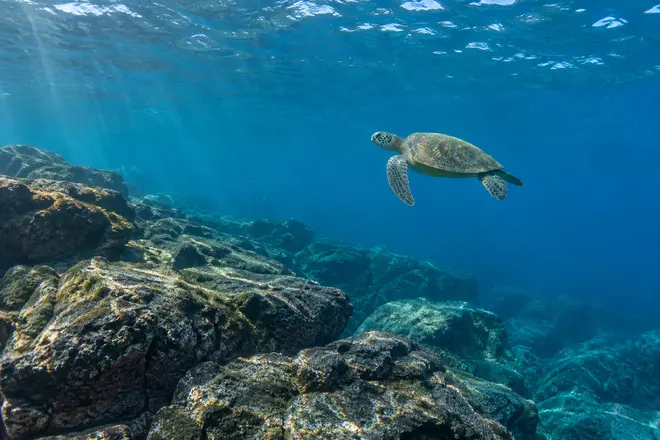
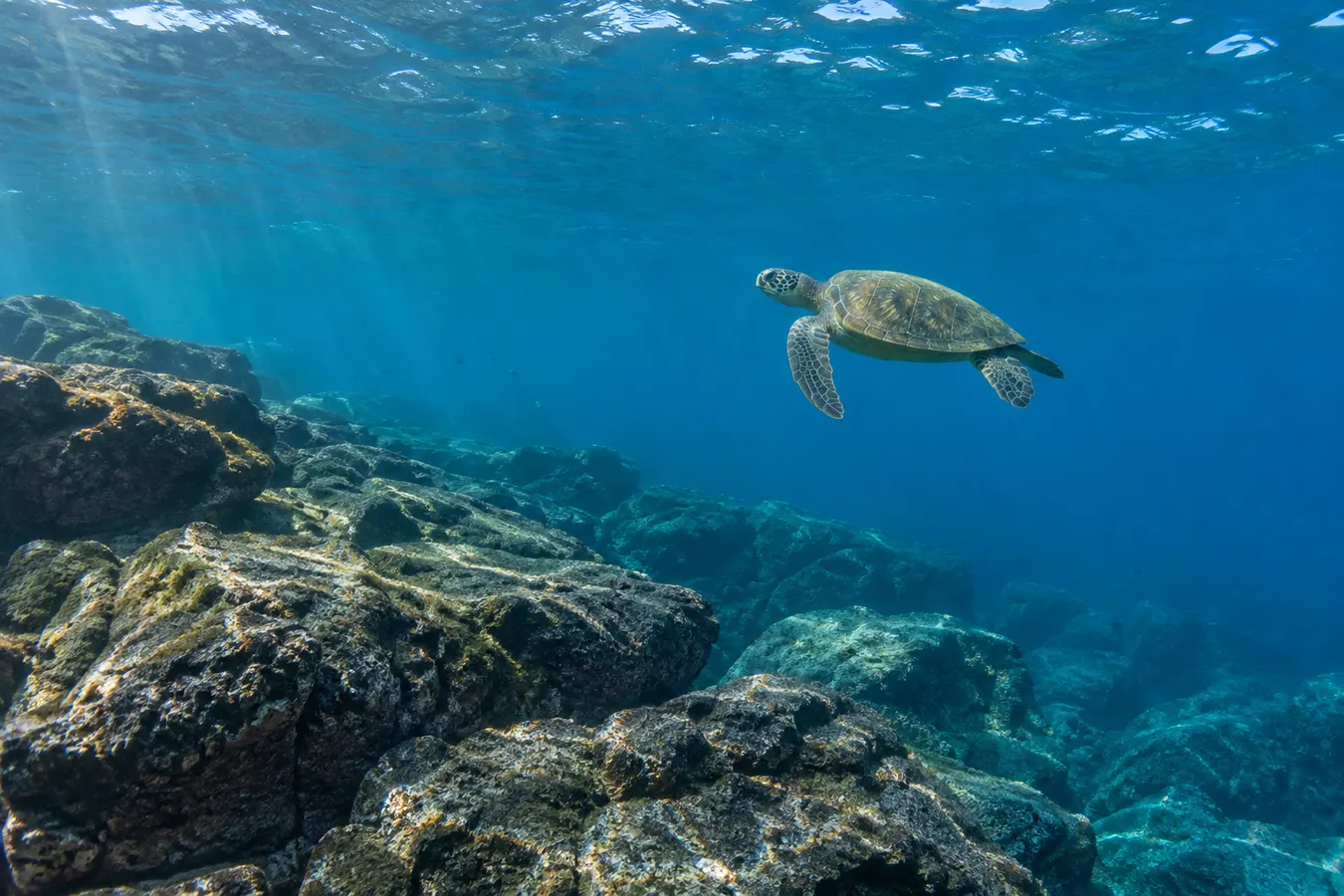
Canary Island waters form part of the extensive ranges of different sea turtles. Among the best-known species are the loggerhead, Caretta caretta, and the green turtle, Chelonia mydas. They can use the environment around the islands during particular stages of their lives. There is no season or beach where their appearance can be guaranteed.
The adult green turtle feeds mainly on vegetation, while loggerheads have a varied diet including different marine animals. These species need to breathe air and are capable of travelling long distances. A turtle heading towards the surface requires space in which to do so freely.
Never feed or touch a turtle or try to swim alongside it to accompany it. If you notice an injured, entangled or stranded individual, report the observation to the emergency services and follow professional instructions. Good intentions are not a substitute for specialised care.
Cetaceans and other ocean travellers
The waters between Tenerife and La Gomera are known for the presence of cetaceans, including bottlenose dolphins and short-finned pilot whales. Unlike watching fish above a sandy seabed, an encounter with these mammals involves specific distances, risks and wildlife protection requirements.
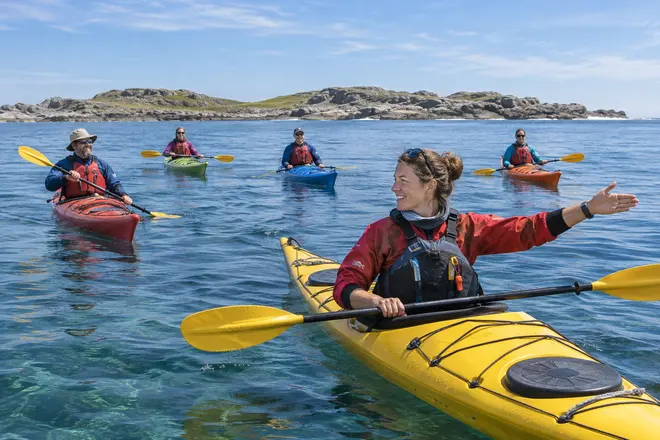
Do not arrange a swimming trip to seek them out. Nor should you move towards them in a kayak or attempt to intercept their route. If choosing to observe cetaceans from a boat, make sure the activity complies with the applicable legal requirements and observes rules designed to protect these animals.
The possibility of spotting a group from land when circumstances permit can be one of the most interesting experiences on a coastal walk. There is much more movement in the ocean than is apparent from its surface.
Your own little field guide
Prepare a very short list of shapes and colours you might recognise rather than a collection of obligatory sightings. After a session appropriate to your ability, you can note what you have observed on paper: the nature of the seabed, whether fish moved individually or in groups, and whether they stayed close to the rocks or in open areas.
These observations are useful even without photographs. Two apparently similar seabeds can support different communities and the presence of a species varies with many factors. Sometimes paying close attention to an area available near a lifeguarded beach reveals more than trying to reach a celebrated site.
Do not remove samples or pursue creatures in order to identify them. The marine heritage of the Canary Islands does not have to fit into a bag or appear in extreme close-up on a camera to be understood. From the surface, in suitable conditions and with respect for the habitat, you can start discovering the complex relationships between the species that live beneath the waves.
Explore next: Snorkelling in Tenerife.