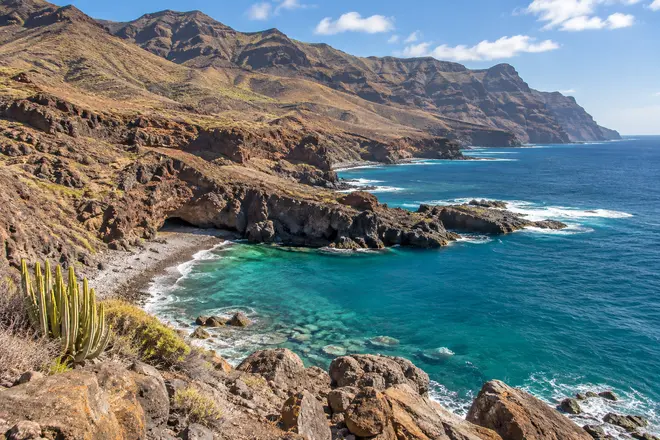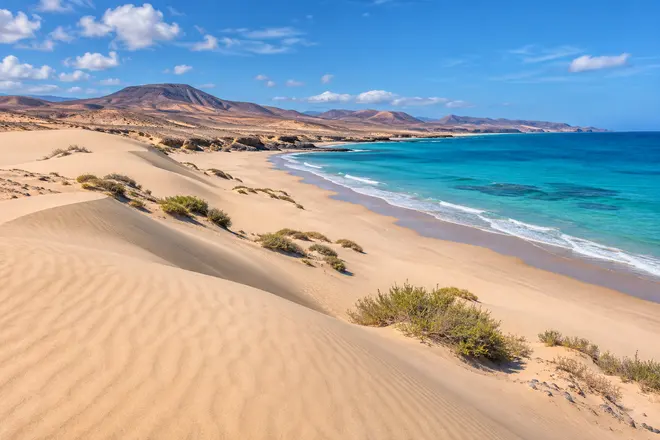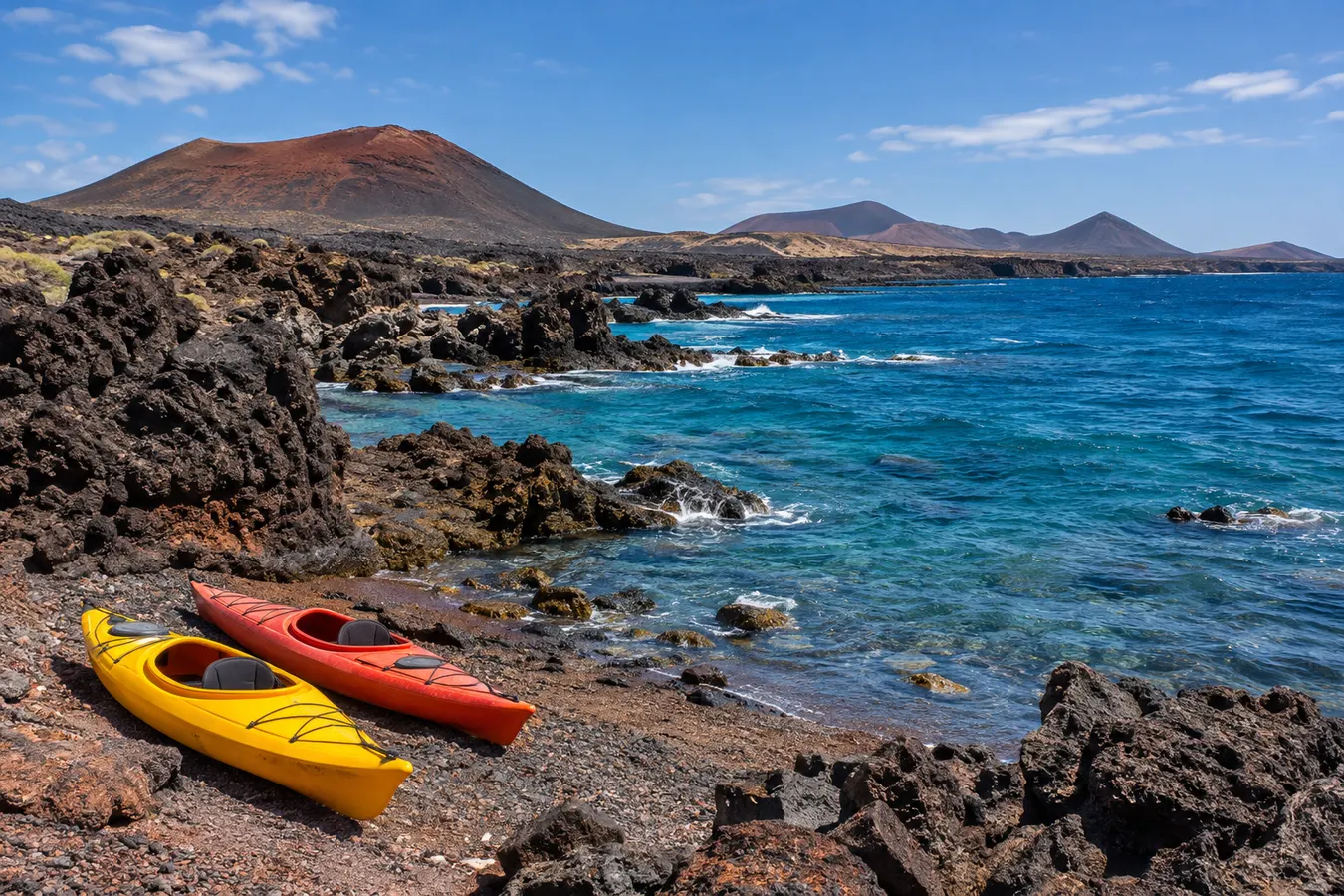
In Lanzarote the island's geology is evident without ever leaving the shoreline. Between the layers of rock on a cliff face, the lava flows extending into the Atlantic and the small pale beaches to the south, there is a succession of landscapes that are difficult to associate with a single place. From a kayak, on a stretch of coast where paddling is appropriate, you can appreciate perspectives quite different from those offered by viewpoints on land.
To organise this kind of trip, it is important to distinguish between shorelines facing in different directions. Typical conditions in one of the coves near Playa Blanca differ from those on the exposed beach at Famara. A perfect morning for walking along the shore at El Golfo could be entirely unsuitable for swimming.
Playa Blanca as a starting point
Playa Blanca occupies the southern end of Lanzarote. Residential and holiday districts, urban beaches and harbour areas line its coast. Looking south you can see the outline of Fuerteventura across the stretch of sea called La Bocaina.
Anyone who wants to combine a kayaking or snorkelling session with more relaxed days will find it easy to arrange a holiday based in this town. The promenade offers a chance to appreciate the scenery, discover which beaches have facilities and find alternative things to do if a scheduled activity is postponed. The area at Las Coloradas marks the transition to more open land in the east, where the arid Los Ajaches massif begins to dominate the view.
On the day before a kayaking outing, find out about the requirements for the activity, the equipment and the necessary level of experience. If you have never paddled on the ocean, seek qualified assistance from someone who is able to adapt the itinerary. It is important to understand how much of the plan depends on the state of the sea, and to accept that the destination or duration might change.
Do not plan to cross to Fuerteventura in a recreational kayak. The other island may look close, but the separation is a considerable stretch of open sea subject to wind, currents and boat traffic. The sensible way to combine the two islands on a holiday is to use the established transport connections.
Los Ajaches and the beaches of Papagayo
Los Ajaches is an ancient massif with a dry landscape cut by ravines. Its shoreline includes several small beaches generally referred to as the Papagayo beaches. Unlike other parts of Lanzarote covered in relatively recent lava flows, this terrain has been exposed to erosion for a long time.
The area forms part of a natural monument. The popularity of the coves among holidaymakers coexists with the need to protect natural processes and features of the landscape. When visiting on land, use the designated routes and approaches. A number of trails make it possible to see several beaches in a single day without ever getting into the water.
Related reading: Gran Canaria for an active holiday beside the ocean.
Organised kayaking activities take place here when conditions are suitable. The proximity of the cliffs offers a different perspective on layers of stone and the influence of marine erosion. That does not mean paddlers have to go close to the cliff faces to enjoy the experience. Sea caves, rocky protrusions and small recesses may present difficulties due to water movements and should not be explored without specialist preparation.
Not every cove makes a suitable landing place. Waves that seem small offshore can become difficult breaking surf as they approach the shore. Follow the instructions of the person leading the activity and respect dedicated swimming areas. A shorter outing with an opportunity to practise controlling the craft is worth more than making an effort to reach every single beach.
Looking beneath the surface at Papagayo
The turquoise colour of the water in some of the coves relates to the light and the nature of the seabed. Rocky zones offer fish a variety of sheltered spaces quite different from conditions found over open sand. Part of the interest of snorkelling comes from observing the changes between these environments.
For a first outing, choose a permitted, shallow swimming area with qualified assistance. The mask should fit comfortably and provide a clear field of vision. Take protection against the sun and cool water, and suitable footwear if the entry involves stones. Avoid using fins to walk over rocky seabeds: as well as making movement awkward, this could damage organisms living there.
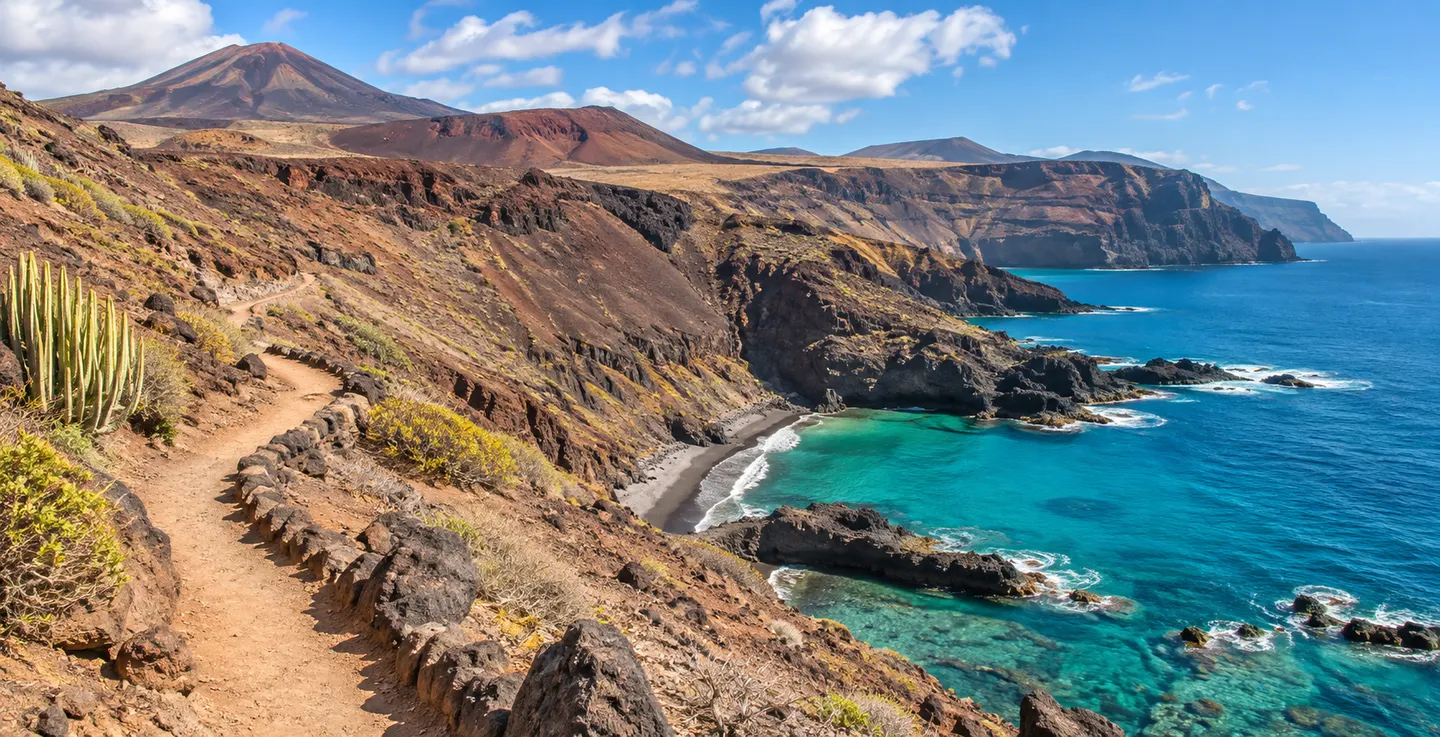
The aim should not be to work through a checklist of species at all costs. Fish move around, the clarity of the water changes and every visit has the potential to be different. Avoid pursuing animals or touching them to see what they feel like. Even a seemingly uninhabited patch of seabed might support small forms of life attached to the stones.
Famara and the attraction of an exposed coastline
In the northern half of Lanzarote, the extensive beach at Famara lies below a wall of mountains that dominates the horizon. Changing light, wet sand, waves and the shape of the land make this a particularly interesting place for a walk and a chance to appreciate the scenery.
Famara is associated with surfing and other sports that take advantage of wind and waves. It is precisely the exposed nature of the shore that calls for extra care. Rip currents and Atlantic swell can create very dangerous conditions for swimmers and inexperienced water sports participants. Do not treat it as an alternative place to learn snorkelling or kayaking simply because the wind is light in other parts of the island.
For travellers who do not participate in those sports, a visit on land retains all the interest of the landscape. The settlement of Caleta de Famara has the scale of a quiet coastal village. From there you can appreciate the maritime activities and views towards La Graciosa without needing to get into the water.
El Golfo and the salt flats
Some of Lanzarote's most dramatic geological contrasts can be seen along the western shore. At El Golfo, dark rock and sand stand out beside the village houses. Nearby is the famous green lagoon of Charco de los Clicos, visible from a designated viewing area.
Further south, the surroundings of the Janubio salt pans combine natural features with human activity. Different conditions in the salt ponds give rise to a remarkable range of colours. The neighbouring beach receives ocean swell and is not a place for an impromptu swim.
These visits reveal aspects of the coast that complement water activities in the south. It makes sense to explore them on a day when the marine forecast is unsuitable for paddling. Use the designated paths and viewpoints rather than climbing down exposed lava slopes or approaching the edge of a cliff in pursuit of a photograph.
Planning a week with room to rearrange things
If kayaking is a priority, make sure you have time for more than one possible date. Spend some time early in the holiday discovering the beaches near your accommodation, looking at access points and familiarising yourself with the environment. Alternate your plans for the ocean with inland visits to the volcanic landscapes and traditional villages.
Always consult the specific marine forecast, follow local signs and avoid paddling alone. A beginner's guided activity should match the capabilities of the participants and the real conditions on the ocean. Take drinking water, sun protection, appropriate clothing and wear a suitable buoyancy aid throughout the outing.
Lanzarote remains interesting from any perspective. You do not have to complete a particular route to appreciate the beauty of its coves, understand aspects of the island's volcanic landscape or enjoy an active holiday beside the Atlantic.
Explore next: Where to stay in Tenerife for active holidays.