Looking at a map of places to stay in Tenerife, it seems easy enough to choose a room near the ocean and leave the rest until you arrive. For kayaking, however, the beachfront is not necessarily a good departure point. Some areas receive substantial swell, some harbours have heavy traffic, and there are sections of beach where launching a boat from the sand is not allowed. An apartment twenty minutes' walk from an organised activity can be more practical than another with a balcony facing the Atlantic. It is a matter of logistics rather than proximity to water measured in metres.
A visitor planning to kayak only once during a holiday can stay a considerable distance away and travel to the meeting point. Someone who wants to spend several mornings paddling benefits from reducing travel and having an option for days when wind interferes with the programme. The following comparison looks at possible places to base yourself for the second kind of trip.
Los Cristianos for combining kayaking with other pursuits
This is one of the most convenient settlements in which to manage without a car for part of your holiday. There are town beaches, shopping streets, a bus station and a long route along the seafront to Las Vistas and Las Américas. Accommodation choices range from simple rooms through well-equipped apartments to larger holiday complexes with a variety of facilities.
The existence of a harbour may cause some confusion. Not all recreational craft depart from the same place as the ferries, and you should not go to a slipway used for port operations intending to launch a kayak without authorisation. If you have arranged an activity, find out precisely where the group meets. Accommodation closest to the passenger terminal may not be the easiest location from which to attend your session.
An advantage of Los Cristianos is its versatility. On days when paddling conditions are suitable, there is time to get something to eat or head back for a rest without a long journey. If an activity is cancelled, you still have pleasant walking areas, nearby holiday towns and transport connections that make a different excursion possible. For a group of friends in which not everyone wants to go out onto the ocean, those options are especially useful.
Costa Adeje and the convenience of plentiful facilities
Costa Adeje occupies an extensive stretch of the south-west coastline and its name is applied to accommodation in quite different areas. Puerto Colón, Torviscas, Fañabé, El Duque and La Caleta do not make up a single compact neighbourhood. There are considerable distances between some of them on foot, and some buildings stand high above the promenade running along the coast.
Related reading: A week of active holidays in Tenerife.
If the main purpose of your trip is kayaking, investigate actual distances to the area in which the activity takes place. For a journey to Los Cristianos, for example, a place to stay at the western end is not equivalent to one near Costa Adeje's bus station. You could compare the cost of an occasional short transfer before paying a premium to stay on the seafront.
There are plenty of ways here to combine an active morning with a quiet afternoon. Some establishments supply meals, hotels have places for relaxing, and apartments make it easy to prepare breakfast at an early hour. Which option is worth paying for depends on your style of travel. You will get little use from full board if you are out on a beach or walking trail every day at lunchtime.
Los Gigantes, Puerto de Santiago and the west coast
Staying in the municipality of Santiago del Teide allows you to contemplate the famous sea cliffs for much of your holiday. Los Gigantes feels more compact than the main resorts in the south; Puerto de Santiago and Playa de la Arena provide other accommodation options nearby. In several parts of the area, elevated balconies and windows offer particularly striking views.
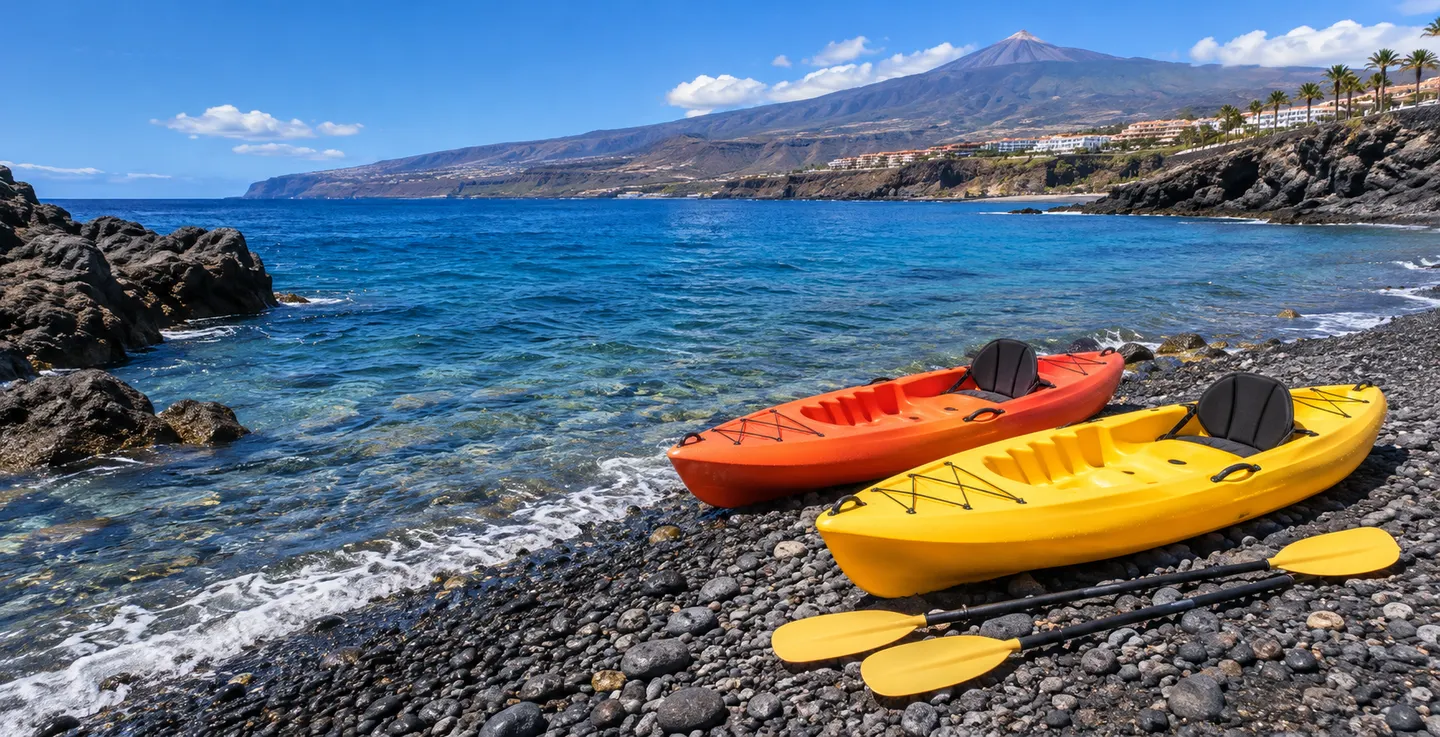
Do not interpret those views as a guarantee of easy access to the shoreline. The terrain has steep gradients and some buildings are situated well above sea level. Anyone walking daily with a backpack full of clothing and equipment may value a route which does not involve long climbs. In the west it is particularly important to check the address of the accommodation on a map which shows you the contours of the land.
The cliffs draw people who dream of paddling beside immense walls of rock. It is an environment which calls for planning, due to exposed sections, possible changes in sea conditions and the absence of easy landing points along parts of the coast. A well-located base on land does not remove those difficulties. It is considerably more sensible to join an outing led by an experienced guide and adapt the route to conditions than to set out from any available beach to reach the cliffs visible from land.
El Médano for people who love wind sports
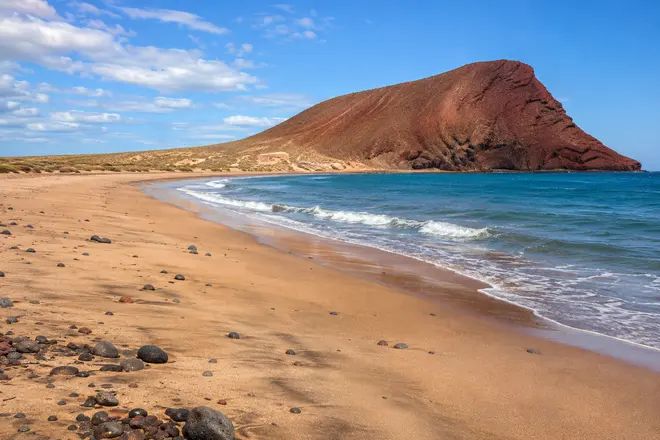
At El Médano, the ocean is part of everyday life. Boards are visible on the beach and people in outdoor sportswear sit at café tables. Walkers follow the shore and Montaña Roja stands out at the far end of the bay. For an active holiday, it is particularly appealing to find so many things to do in a relatively compact town.
However, the wind which favours numerous types of sailing and windsurfing can be inconvenient for someone hoping to learn to kayak. Do not choose a place to stay here on the assumption that every morning will be suitable for paddling from the beach. If you are visiting to combine several sports or spend part of your time walking on land, El Médano could work extremely well. Otherwise, it is worth comparing a base farther west and looking into the availability of guided activities there.
What your accommodation really needs to offer
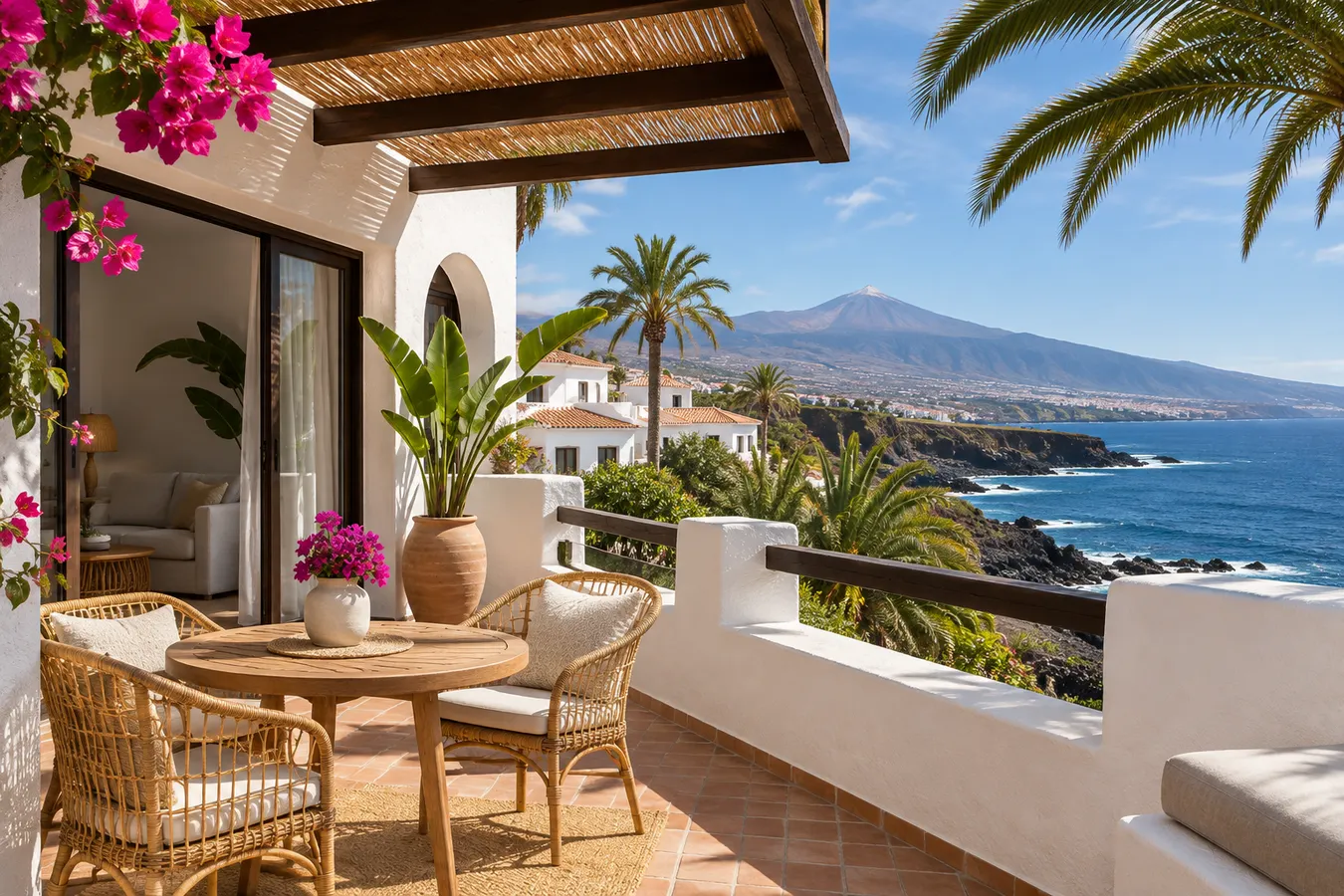
Photographs of pools, terraces and newly decorated rooms tend to be the first thing you see in accommodation listings. On a holiday with several days dedicated to activities at sea, other details are just as valuable. Before booking, it is worth going through a few questions:
- Is there somewhere suitable to hang a wet swimsuit, wetsuit or towel without breaking the property's rules?
- Are the shower and hot water facilities private or shared?
- How can you get breakfast at an early hour and store a little food?
- Is it possible to walk to the meeting point, does the route have steep gradients or do you need transport?
- What are the check-in, check-out and luggage arrangements if your last day includes an activity?
People travelling with their own equipment have additional needs. The size of a kayak, transport from the airport and secure storage all require specific solutions. Never assume that common areas of an apartment building are available for storing bulky gear. On a short holiday, it may be far simpler to participate in sessions supplying the appropriate equipment than to bring it with you from another country.
When to split your holiday between two bases
Changing accommodation every two nights takes up time and introduces additional transport worries. For a visit lasting four or five days, one base usually makes most sense. A full week allows for a different approach: you can spend a few nights in the south to do activities on the ocean and reserve the remaining nights for exploring the north and the mountains. You need not find another base geared towards kayaking for the second part of the trip.
One good approach is to mark the activities you are interested in on a calendar and then count up the journeys made necessary by staying in each town. If most of the experiences are in Los Cristianos, paying for a room across the island to make a modest saving is unlikely to make sense. If you will be paddling on just one day, your ideal accommodation might be in a village with no kayaking facilities at all. The important thing is for it to make the entire holiday easier, rather than simply giving you a place close to the ocean.
Explore next: Where to stay in Tenerife for active holidays.