A conventional-looking swimming pool beside the ocean and a cleft in the lava that fills with seawater are frequently described by the same name: a natural pool. Tenerife has examples of these places that differ enormously. Some have steps, prepared surfaces and amenities characteristic of an urban bathing area. Others retain much of the shape that the rock acquired when it reached the sea. In either case, the interplay of water and rock creates a little landscape within the wider shoreline. When planning a visit, it is worth understanding both the kind of pool and the conditions at the time, since the term natural pool cannot be interpreted as a guarantee of safety.
El Caletón and the volcanic history of Garachico
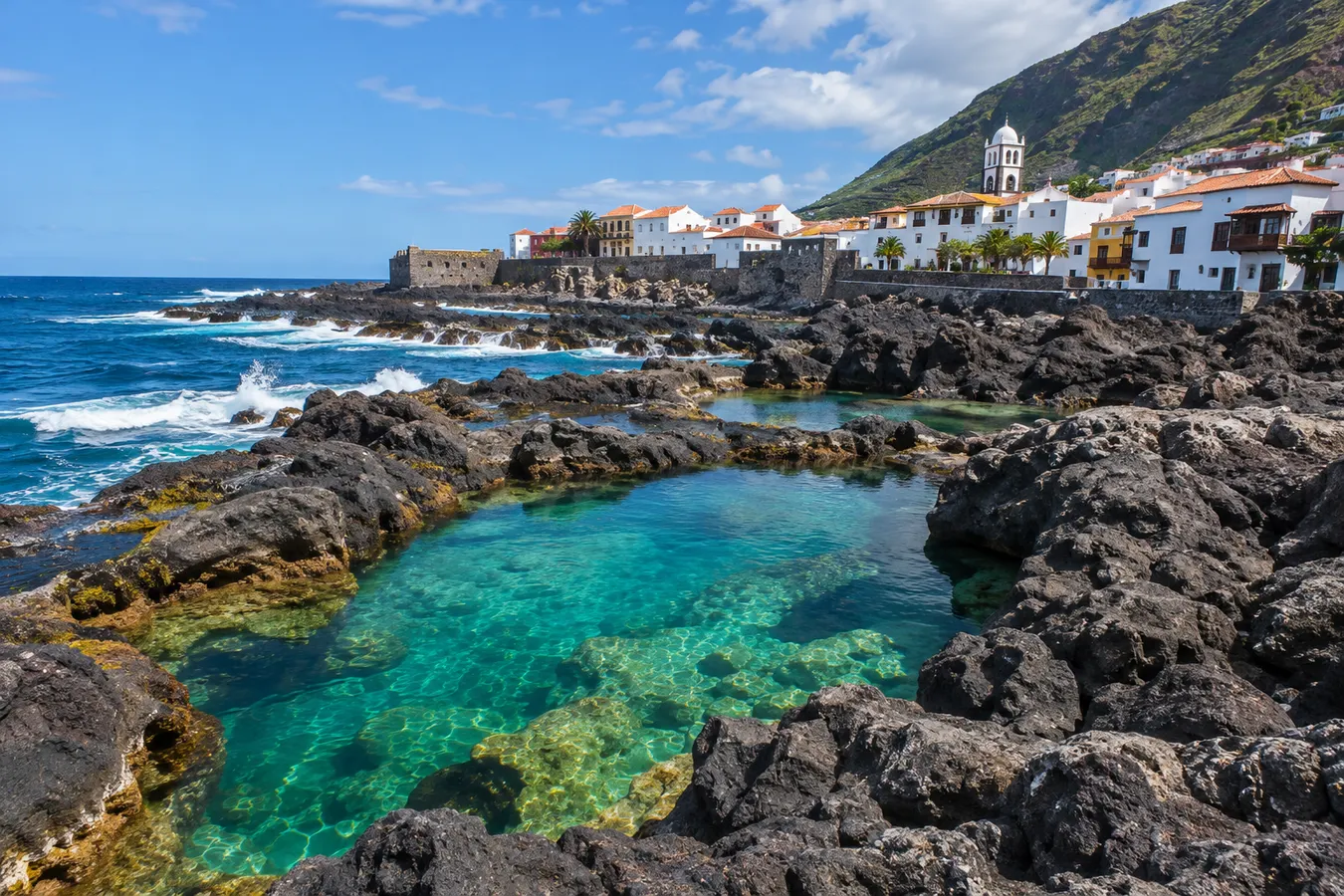
The pools of El Caletón occupy a distinctive position near the historic streets of Garachico. The coastal landscape of this town was shaped by the eruption of 1706, which brought profound changes to its old harbour. Beside the town are low lava walls and a succession of hollows occupied by seawater. Passages between the pools and prepared approaches allow you to distinguish some of this volcanic pattern. It is a way to observe the geology of Tenerife in direct relation to a settlement whose buildings and squares also show an earlier period in the island's history. The proximity of the town makes it particularly convenient for a varied day of sightseeing.
Standing in front of El Caletón, it becomes clear that the pools do not necessarily have the same dimensions, depth or exposure to the sea beyond. Do not jump from one to another over walls or rocks, or try to identify the deepest places so that you can dive into them. Organise a visit using the public paths and following any instructions for the area when it is open. During heavy seas, El Caletón may close, and it is worth substituting a walk around the town for any intended swim. Garachico's inland streets and squares offer an alternative outing that does not depend on access to the coastal pools being available.
Charco del Viento, a small bay between lava promontories
In the municipality of La Guancha, the Charco del Viento has a different shape altogether. Two extensions of volcanic rock enclose an indentation in the shore near Santa Catalina. The combination of dark rocks and clear water is especially attractive when the sunlight allows you to glimpse something of the seabed. The surroundings are less urban than those of El Caletón. Before travelling there, plan your access and make sure you have drinking water, shoes suited to uneven surfaces and somewhere to put any rubbish you need to take away. These details matter rather more than at a bathing area with all the facilities of an adjoining town promenade.
The name of the pool evokes a characteristic of Tenerife's northern shoreline: you cannot decide whether to go swimming by looking exclusively at the water between the two arms of rock. The behaviour of the waves beyond them and the approaches to land also determine whether a visit is suitable. If warnings regarding coastal weather are in force, pay particular attention to any closures. Although it is described as an interesting spot to see marine wildlife, snorkelling in a rock pool requires the same general considerations as other water activities: bathing must be permitted, conditions appropriate, the activity suited to your ability and safe access out of the water available.
Related reading: Punta de Teno: visiting Tenerife's westernmost point.
Bajamar and Punta del Hidalgo: pools beside the villages
The group of pools at Bajamar contrasts with less developed rock pools. On the coast of the municipality of San Cristóbal de La Laguna, it brings together several seawater bathing areas, including two larger pools and a smaller one. The location beside the promenade and the prepared access arrangements allow you to combine your visit with time in the village streets. Do not take the availability of lifeguards, changing facilities or other amenities at every hour of the day for granted. Check whether they will be operating if they are essential for someone in your group. The accessibility of this area is one of the reasons to choose it when travelling with people of different interests and abilities.
Punta del Hidalgo, a little further along the coast from Bajamar, offers another meeting of a coastal settlement with a landscape defined by the proximity of Anaga. Its pools, lava shoreline, seafront and mountains create an itinerary that allows you to make several different observations without necessarily spending the day in the water. It is interesting to visit both villages in a single outing, although there is no need to swim in both to make the most of the trip. The possibility of rearranging the programme according to the opening of facilities and the state of the ocean is part of the appeal of these destinations.
Alcalá and La Jaquita in the south-west
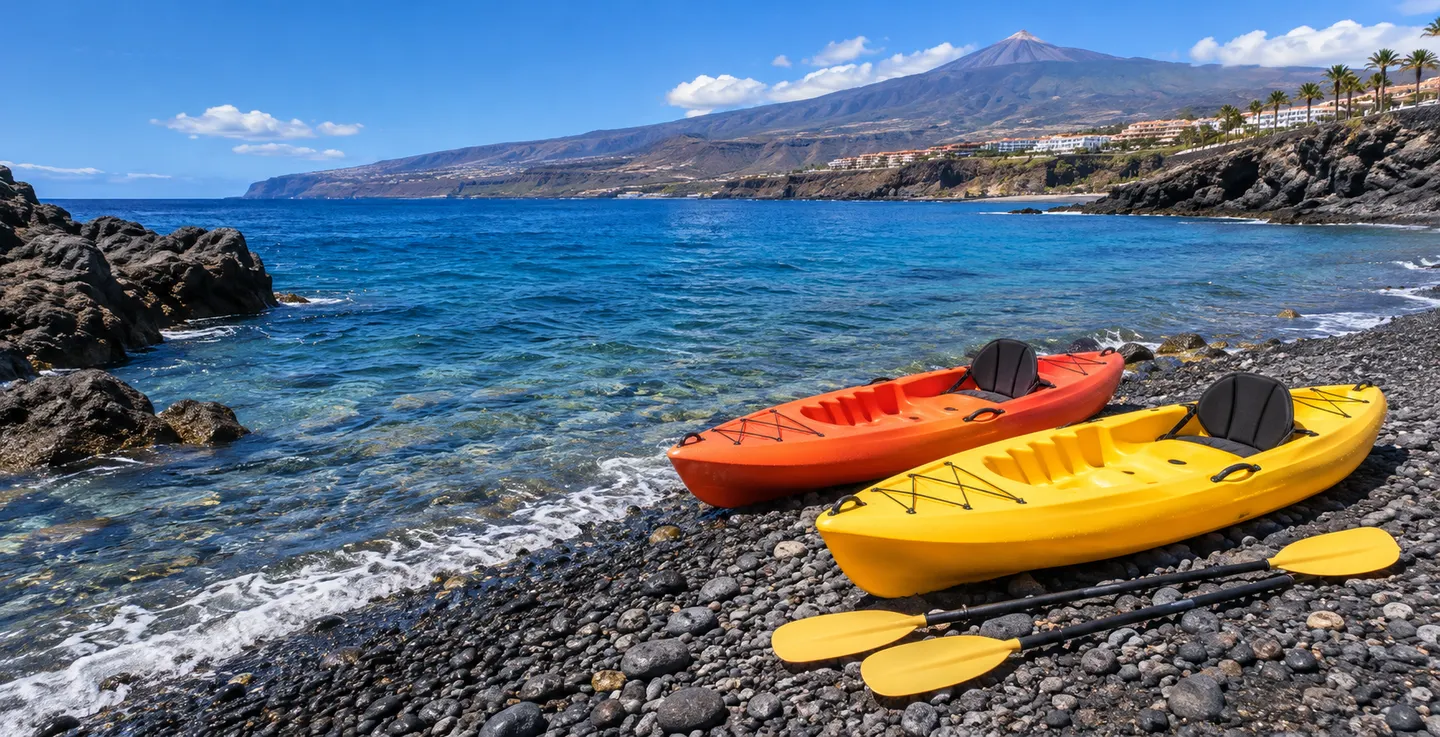
Not all natural pools are found in the north of the island. Along the shoreline of Alcalá, within Guía de Isora, small beaches, rocky sections and pools form part of the La Jaquita seafront. From the prepared paths you can see the contrast between areas of lava and the cultivated spaces beside the promenade. Sunset is often attractive in this part of Tenerife, but anyone planning a late afternoon visit should check the access hours beforehand. When a particular bathing area is unavailable, the coastal paths still make it possible to appreciate the arrangement of the landscape. You can see a succession of different little inlets along a fairly short stretch of the shoreline.
This part of Tenerife often features in holidays centred on Los Gigantes, Puerto de Santiago and the coast of Adeje. Setting aside a morning for Alcalá offers a chance to rest between more demanding activities at sea. The pools do not have to become an extension of the previous day's sporting pursuits. Even in favourable conditions, this may be a place to take your time over a walk and notice the different textures of rock. Pay particular attention to designated access areas, since the uniform appearance of the water does not reveal every change in depth or obstacle beneath the surface.
Choosing when to visit and preparing for the conditions
Tides matter in many rock pools, but it is not sufficient to consult a tide table and conclude that it will be appropriate to bathe. Waves can penetrate apparently protected areas at irregular intervals, reaching surfaces that seemed dry a few minutes earlier. Follow warnings, access restrictions and local instructions. Where waves are breaking over rocks or protective walls, stay away from exposed ground. Wet steps and surfaces covered by water may be slippery. There are far more sensible viewpoints on firm land for taking photographs of the spray than in the immediate vicinity of the breaking waves.
An adult travelling with children needs to consider the layout of the area and how easy it will be to remain beside them at all times. Natural pools may have irregular depths and rocky edges, so a small pool does not necessarily mean a pool suitable for children. Jumping from rocks and diving into places of unknown depth are inappropriate. Where access is difficult or there is no suitably prepared area for your group, a managed swimming pool makes a better choice. In supervised bathing areas, instructions from the staff take priority over any advice you have read prior to travelling.
For an outing of several hours, carry drinking water, sun protection, a towel, dry clothes and footwear appropriate for the surface. The contents of your bag may differ according to whether you are visiting an urban bathing area or a little pool far from town. What should not change is the intention to return with all your belongings and rubbish. Wildlife in rock pools depends on changes in water, shade and the underlying rock that are difficult to perceive at first glance. Leaving small animals, algae and stones where you find them helps preserve the character of the pools. After exploring several of Tenerife's bathing places, it is easy to appreciate that they are not interchangeable examples of a single kind of pool, but little expressions of very different marine landscapes.
Explore next: Kayaking and snorkelling in Tenerife.