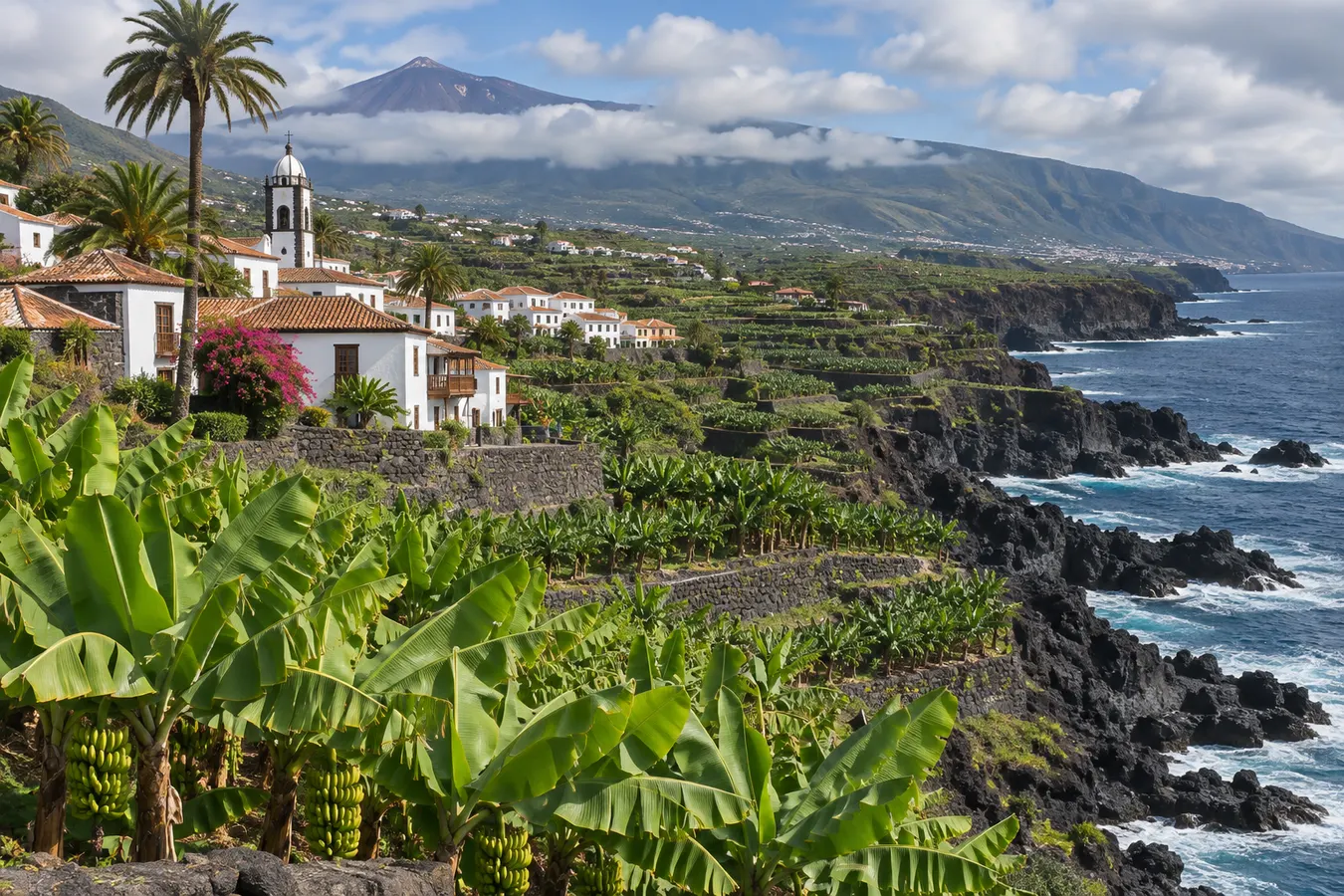
The towns and cities of northern Tenerife offer a different kind of break for anyone who has spent several days beside the sea. In La Orotava, that does not mean leaving the hills behind. Start exploring the old town on foot and you quickly discover that the slope is as important as the façades and monuments. Church towers, tiled roofs and garden terraces are scattered at different elevations above the valley.
The town of La Orotava possesses one of the most interesting historic centres on the island. It is situated above the coastal strip, in a wider area that extends from the Atlantic towards the slopes of Teide. A half-day visit provides a good introduction to its architecture, though it is not long enough if you also want to explore the old watermills and surroundings.
Starting among the historic houses
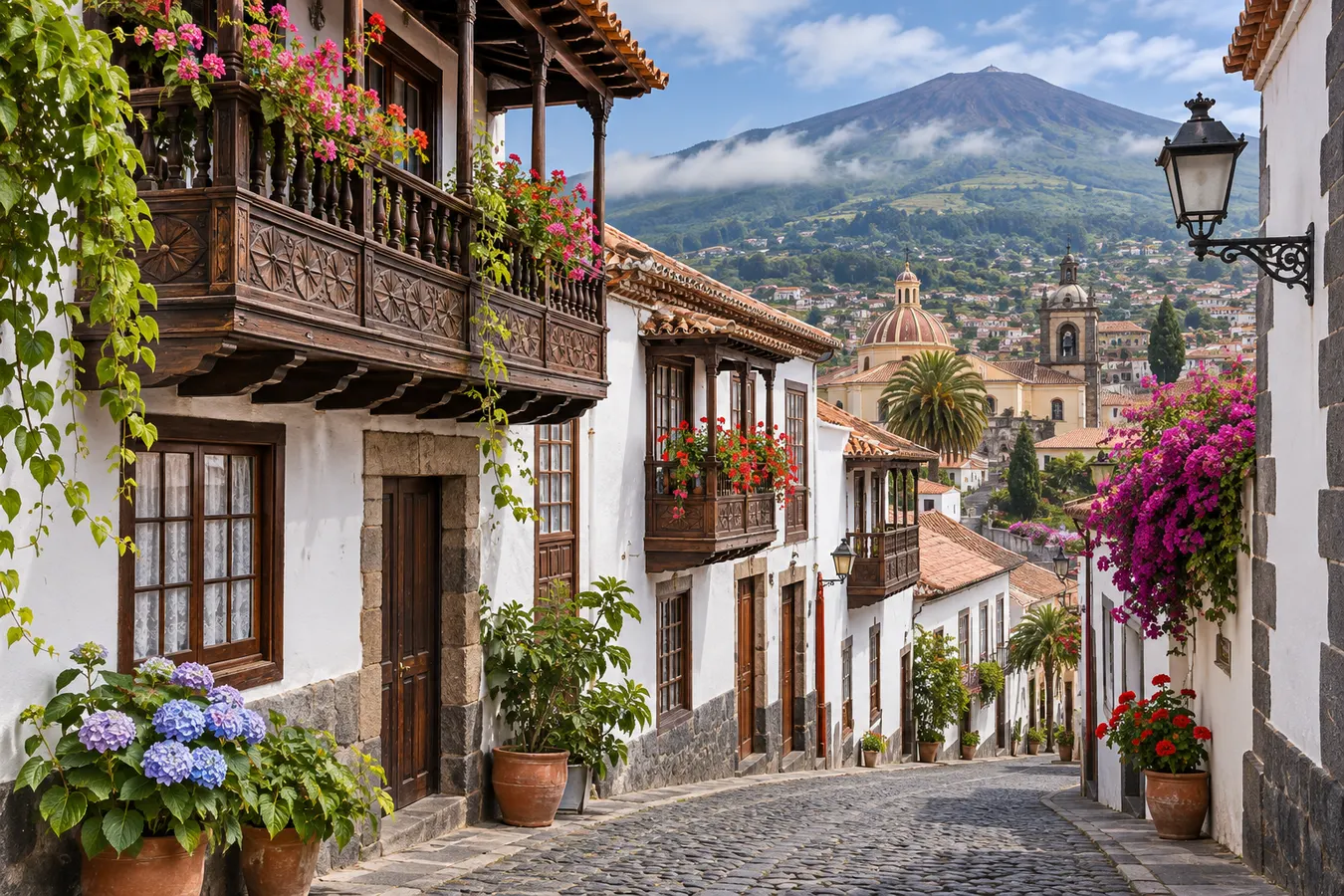
The streets around the Church of Nuestra Señora de la Concepción provide a good point of reference in the centre. Its dome, visible from a number of streets, stands out above the town's landscape. Buildings nearby reflect construction methods from different periods and show how architecture adapted to the sloping streets.
Walking towards Calle Colegio introduces you to some of the municipality’s most notable wooden balconies. Their designs are not identical. There are variations in railings, carved supports, the depth of the exterior space and features that provide protection from sunlight.
The seventeenth-century Casa de los Balcones is a landmark of the town's domestic architecture. Other historic houses also demonstrate the importance of wood, both on the street-facing sides and in the arrangement of their interior courtyards. These large houses were not designed simply to provide attractive façades: their spaces reflect particular historical arrangements of family and social life.
It is interesting to look at the materials along the streets. A door surround of cut stone shows a different approach to that of the continuous masonry walls, and the wooden window frames reveal the skills associated with older trades. The details are best appreciated when there is time to stop.
A terraced garden in the middle of town
The Victoria Gardens, also known for their association with the Marquess of Quinta Roja, occupy sloping ground that has been made useful through a series of terraces. Fountains, stairs and flowerbeds form a geometric composition that resolves the challenge of the gradient without trying to disguise it.
The garden was established in the nineteenth century around a funerary project associated with the Marquess of Quinta Roja. Its current appearance allows visitors to appreciate that design and look out over the old town from an elevated position. On days of good visibility, the view extends across the valley.
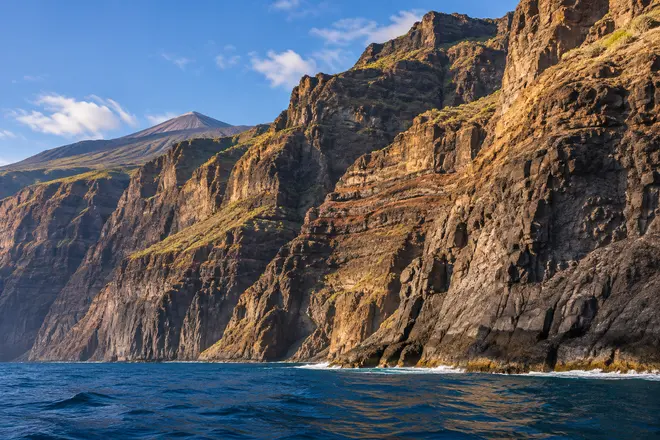
Related reading: The cliffs of Los Gigantes: different perspectives from land and sea.
A leisurely visit is particularly rewarding for anyone who has already spent hours walking up and down the town centre. The garden includes stairs, and not every level is equally accessible. Visitors with particular mobility requirements should check which areas are open and how to reach them.
The Hijuela del Botánico, another green space in the town, offers a different kind of experience. In contrast with the terraced composition of the Victoria Gardens, vegetation takes centre stage here and you can see a variety of trees at close quarters. It is a pleasant place to pause and identify plants.
A town shaped by water
La Orotava cannot entirely be understood by visiting its monumental buildings alone. In the part known as Villa de Arriba are landmarks of a different kind of activity: the old water channels and hydraulic mills. Several mills built during the seventeenth and eighteenth centuries took advantage of water flowing downhill.
Old channels and visible remnants of these installations demonstrate the importance of water supply and the harnessing of energy. In the Canary Islands, gofio has a particular place in traditional food. The transformation of toasted cereal grains into flour is associated with a long history of work in mills.
The walking route known as the Ruta de los Molinos combines local history and physical activity. Unlike a stroll along the coast, the gradient of the streets involves frequent changes of pace. You do not need to seek out every one of the mills if time is limited; recognising a few of these structures helps explain the differences between Villa de Arriba and the area of historic mansions.
Around the route you can see how architecture relates to everyday life, with houses, shops and streets in regular use by residents. Visitors should accommodate this activity and keep access routes clear.
When carpets fill the town centre
The celebration of Corpus Christi takes a particular form in La Orotava. During the Octave of Corpus Christi, carpets are laid out in the streets and in the town hall square, where a large composition made from volcanic sands of different colours becomes a central feature.
These works are ephemeral. The most interesting aspect is not simply appreciating the finished results, but understanding how the practice brings together local residents. The materials, subjects and process of making the carpets form part of a particular tradition.
The dates vary from year to year. If you hope to visit during the celebrations, check the municipal calendar and allow for changes to traffic and pedestrian access. A visit outside the festival period is still rewarding, but you should not assume that carpets will be on display in the square.
From the valley to the coastline
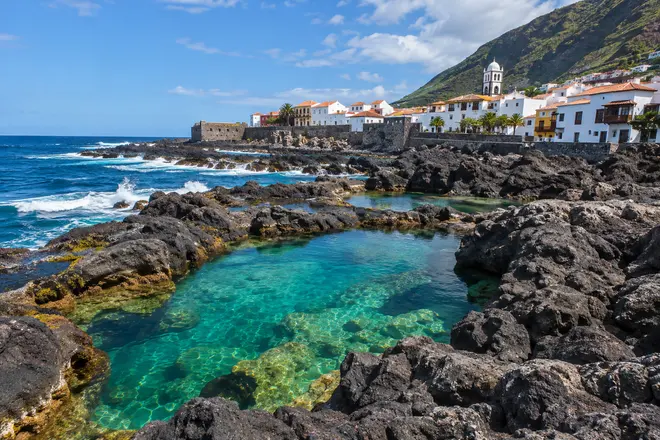
Descending from La Orotava towards Puerto de la Cruz, the immediate landscape changes. The network of town streets gives way to farmland, residential settlements and eventually the shore. Within the municipality of La Orotava there are dark-sand beaches, some lying at the foot of cliffs.
El Bollullo is among the best-known locations along this part of the coast. Distinguish a scenic visit from a bathing trip: the exposed north coast receives Atlantic swell, and sea conditions may completely alter the opportunities for access and recreation. Local notices and conditions take priority over any plans made at your accommodation.
People who have spent time kayaking in a sheltered area of the south may be surprised at the contrast. Not all beaches are suitable for the launch of a small vessel, and you should not extrapolate the conditions along one coast of the island to another.
Towards the pine forest and Las Cañadas
The ascent towards Teide through the upper section of the valley reveals a succession of environments. Above the populated areas there is agricultural land and, at greater elevation, Canary Island pine forest. Higher still, the open scenery of Las Cañadas contains landforms and colours that contrast with the green of the north.
To make the most of both extremes, it is worth setting aside two separate days. The slopes, gardens and historic architecture of La Orotava are ample reason for a visit of their own. Teide also requires preparation due to the altitude, and trying to fit in a long mountain walk after sightseeing can transform a good itinerary into a succession of journeys.
As a base for an active holiday, the valley makes it possible to alternate town visits, hiking and days on the coast. The precise location of accommodation matters more than any particular view: check the walking gradients, convenience of available transport and time required to reach the places where you intend to spend your days. La Orotava then ceases to be a quick excursion from somewhere else and becomes a way of understanding northern Tenerife.
Explore next: Kayaking in Los Gigantes.