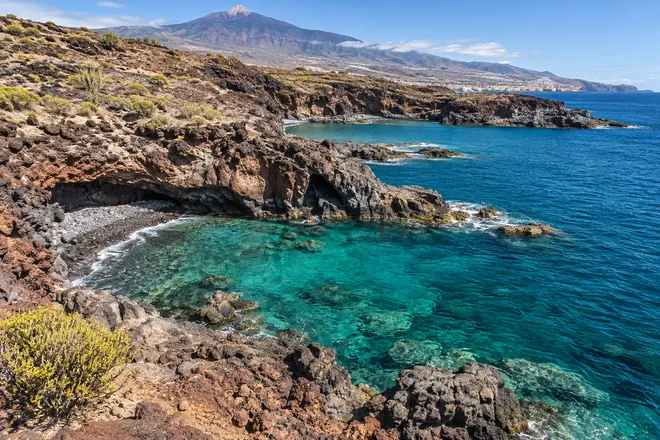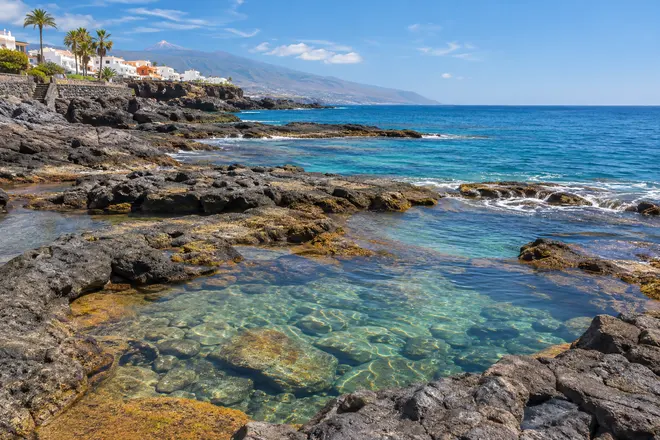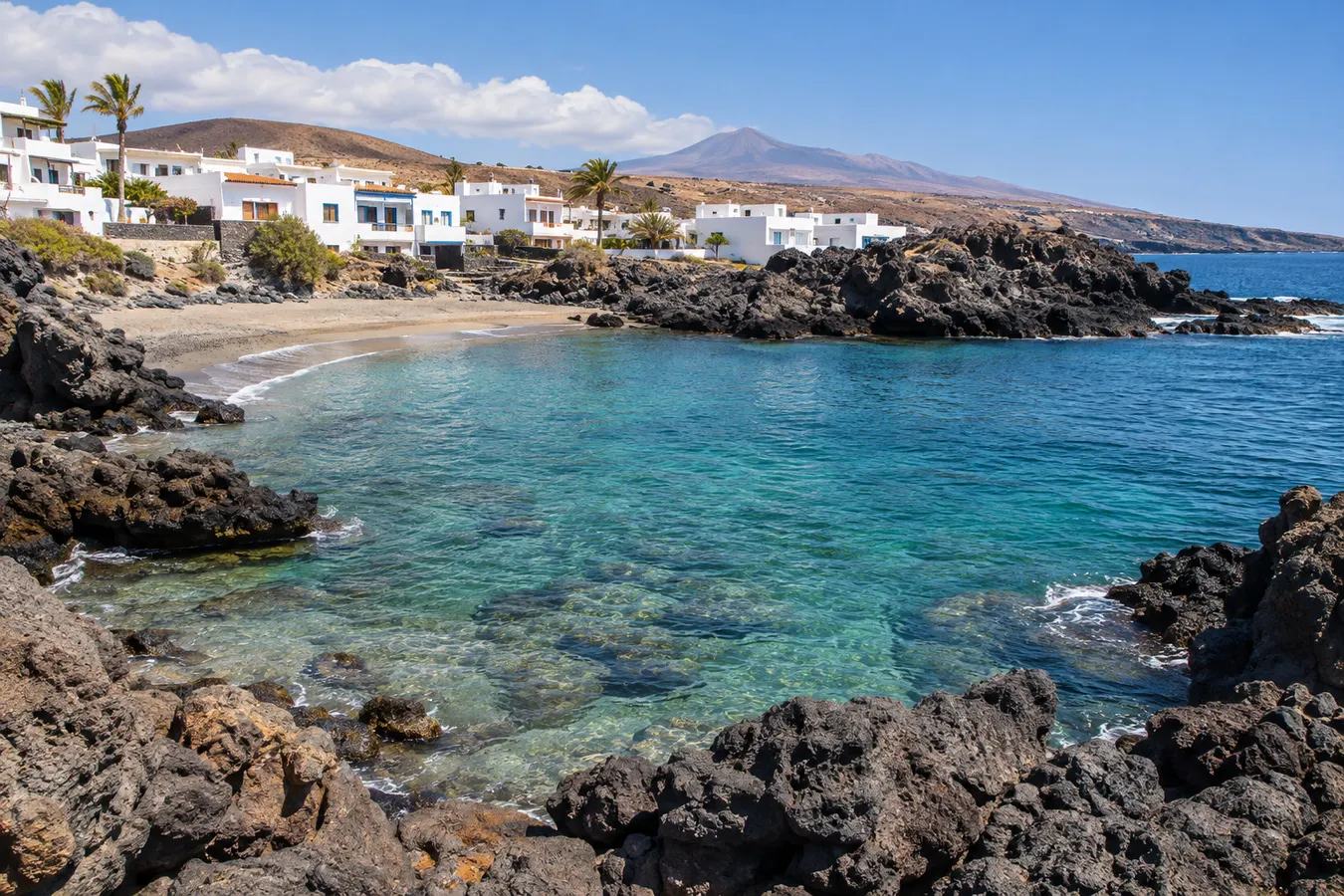
On the south-eastern coast of Tenerife, away from the scenery of the major resort complexes, Abades has the feel of a small seaside village. Its pale houses contrast with the volcanic stone and dark sand. As you approach the stretch of beach known as Los Abriguitos, the profile of the seabed is partly concealed by the glare of sunlight on the surface. This is where the attraction begins for anyone looking to spend part of their holiday observing the sea.
Abades lies in the municipality of Arico. Its coastline is well known among divers and snorkellers, partly because of its combination of sandy bottoms and rocky areas. Looking down from the surface allows you to appreciate some of that diversity without seeking depth or arranging a dive. Its reputation, however, does not mean you can always enter the water.
Los Abriguitos beach
Los Abriguitos is an urban beach about 250 metres long, according to the island's visitor information. It is relatively easy to reach from land and there are facilities in the village. The fine volcanic sand can become hot in direct sunshine, something worth remembering if you arrive without suitable footwear or with children.
If you are accustomed to the golden beaches of the Mediterranean, you may initially notice how dark the shoreline appears. Once light shines through the water, the underwater landscape can reveal shades of grey, ochre and green. Rock and sand combine to form areas of seabed that differ in appearance. You do not have to go far offshore in search of more dramatic underwater scenery.
Get organised before heading to the water. Find a secure place to leave dry clothes and personal items. If you arrive in a group and not everyone wants to swim, the beach makes it possible to alternate time in the water and on land. This is much more comfortable than attempting to swim with rucksacks and loose belongings.
The conditions you might encounter
Tenerife's south-eastern side often experiences wind, and Abades is subject to the usual changes of a coastal setting. Clear skies and comfortable air temperatures are no guarantee that swimming conditions are suitable. A morning that starts off quietly can look quite different a few hours later.
Check the coastal forecast in advance and, on arriving, spend a little time examining the surface and the water's edge. Follow signs and the instructions of beach safety staff. If swimming is prohibited, stay out of the water. Do the same if you cannot identify a comfortable exit or if waves and currents are beyond your experience. You cannot judge whether an activity is suitable simply by counting the number of other people in the sea.
Some visitors arrive intending to snorkel and then move immediately on to another part of the island. Leave plenty of time instead of working towards a fixed hour to enter the water. Sometimes the result of your visit will simply be a walk, lunch with a view of the sea or a rest beneath a sunshade.
Related reading: Where to snorkel in Tenerife: beaches and coastal spots.
A small change of perspective
Suppose you find favourable conditions, have sufficient sea swimming skills and have selected a permitted area with straightforward access. Rather than setting out to swim a long distance, spend time studying the same little patch of seabed from the surface, with your companion. You have a better chance of noticing the details that are easy to miss when swimming quickly.
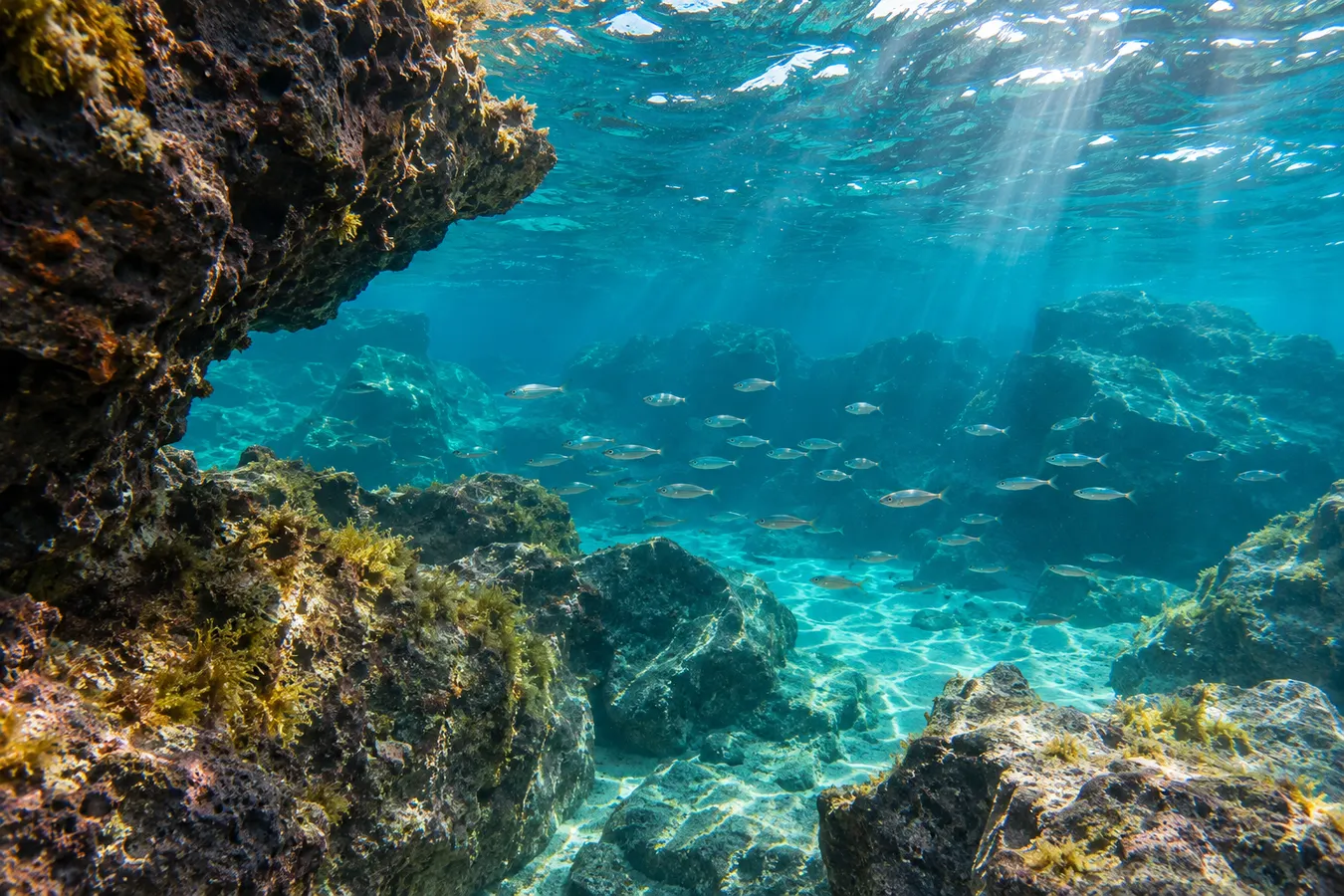
On the sandy bottom, you might find markings and differences in colour; light forms lines that move as the water shifts. Near rocky areas, algae and fissures provide different kinds of shelter. Damselfish can often be recognised by their dark appearance and seabream by their silvery sheen. Occasionally you might recognise a Mediterranean parrotfish by the way it swims and the shape of its jaw, adapted for grazing on the substrate.
Algae on the seabed do not grow like a neatly laid out garden. Some areas have more coverage than others, and certain surfaces appear bare. Crevices may harbour small organisms you cannot see from above. Do not lean on stones, pull up vegetation or move rocks to see what is underneath. When an animal stays hidden, that is how it keeps itself safe.
There is no need to identify every species, either. Bringing a short list of fish to consult after you get out of the water can be more interesting than trying to photograph everything you encounter.
What to bring for a few hours in Abades
A day on the coast is easier to enjoy when your equipment is simple to manage. For snorkelling itself, test the fit of your mask, snorkel and fins in a controlled setting before the trip. If you are unfamiliar with them or lack experience in the ocean, consider an introductory session under supervision.
The water can feel cooler than expected, particularly after you have remained still for some time watching the bottom. An appropriate garment for thermal and sun protection can improve your comfort, but it is not a reason to extend a session artificially.
For the part of the day spent on land, a towel, water, beach shoes, sun protection, a hat and a bag for damp clothes are useful. If you are coming by public transport, check outward and return times before leaving; if driving, use designated parking areas only. You may still have other journeys to make along the coast later in the day.
A small snack allows you to rest without having to find somewhere for lunch as soon as you get out of the sea, although the village does have places to eat and take a break. Collect all your packaging: the wind can take a discarded napkin or plastic bag into the water very quickly.
Visiting Abades with the family
An easy route onto the sand should not be confused with a blanket recommendation for children to snorkel. Age, swimming experience, ability to understand an adult's instructions and comfort when wearing a mask vary widely from one child to another.
For some, it is enough to play in a permitted part of the beach and look at fish from land whenever possible. Others may benefit from learning to use the equipment under supervision in controlled conditions. Do not take someone who lacks confidence into deep water or an area that is difficult to leave in an attempt to help them overcome their fear.
On a family day out, it is perfectly reasonable for each person to have a different goal. A short outing by one adult while their companion remains on shore with the children may work better than trying to involve every member of the group simultaneously. If you have doubts about the conditions, the sensible option is to postpone all swimming.
Combining the coast and the village
Abades can be the centre of a relaxed day out in south-eastern Tenerife. It does not need to become a race between beaches. After your activity, there is the opportunity to get changed, have a rest and walk along the streets near the coast. You can gain a better appreciation of how the village has adapted to the dry landscape when you are not visiting solely to snorkel.
On your way back to another part of the island, a viewpoint or other permitted stop might fit into the itinerary, depending on the hour and how much energy your companions have left. Some people are surprised to discover that the contrast between the arid interior and the volcanic coastline is nearly as photogenic as what they have seen underwater.
A successful visit to Abades is not measured by the number of fish you have seen. It can comprise a short session, a pleasant beach, the changing patterns of light on the lava and the satisfaction of not having forced yourself into the sea when the circumstances did not favour it.
Explore next: Snorkelling in Tenerife.