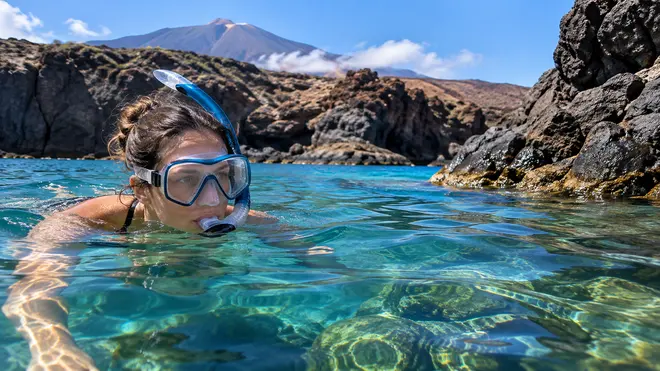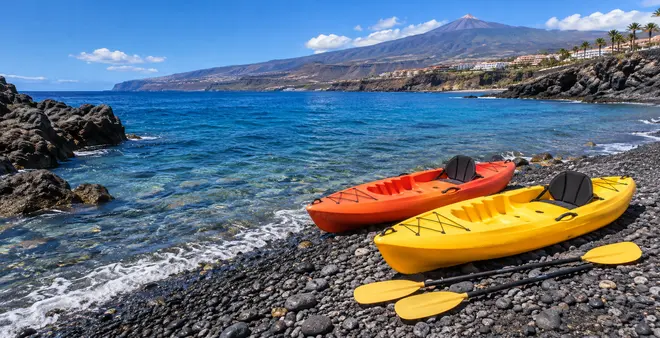
Travellers putting together a trip to Tenerife often mark a collection of beaches on a map. For snorkelling, it makes sense to select them using different criteria from the ones you would use for sunbathing. Attractive sand, appealing water colours and proximity to your accommodation are not enough. The ease of entry, exposure to swell and nature of the seabed have far more importance.
The island has several places well known for their marine environments, but the sea is constantly changing, so none of these suggestions substitutes for the judgement you must exercise when you arrive. Check coastal warnings, wind and beach flags. Do not go alone or swim in areas used by boats, and abandon your plans if conditions are unsuitable. These suggestions concern observation from the surface, not underwater diving or freediving routes.
Los Abriguitos, in Abades
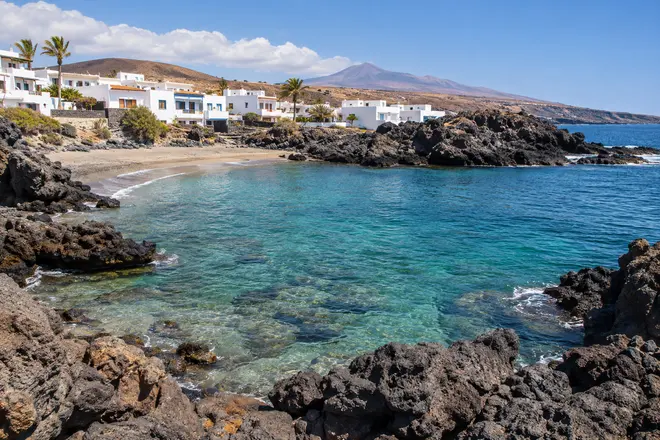
On the Arico coast, Abades stands out for its volcanic sand beach within a small settlement of houses and local businesses. Its beach, Los Abriguitos, is straightforward to reach from land and offers somewhere to spend time without carrying your equipment from a remote car park. The Abades area is among the island's established diving locations.
When conditions allow, its mixture of sand and rock offers a good illustration of different habitats that you can observe underwater. Sandy bottoms afford fish fewer places to hide; towards the rocky patches, changing textures and algae invite you to look a little more closely.
Consider the exposure of the south-east coast to the wind. If you have several days in Tenerife, you do not have to commit to a particular date for visiting Abades at the start of your holiday. You can assess the beach against the forecast and enjoy a visit on land if it is unsuitable for getting into the water.
Las Vistas and the Los Cristianos coastline
Las Vistas is worth considering for a first taste of snorkelling because of its proximity to accommodation, a waterfront promenade and various facilities. You can plan a short outing without taking up the rest of the day. In suitable conditions, there may be opportunities to become familiar with your mask and watch small fish without setting out on a long swim.
Keep away from breakwaters and boat routes. Los Cristianos is an active port and the presence of a beach nearby does not mean the whole coast is suitable for swimming. Choose designated areas, follow lifeguards' instructions and remain aware of where you can return to shore.
There is a practical difference between exploring a modest, accessible patch of a beach and trying to traverse the whole shoreline between neighbouring beaches. For a simple outing, it is better to spend time watching a small area of seabed from which you can return easily.
Related reading: Snorkelling in Tenerife for beginners: your first experience.
El Puertito de Armeñime
This little cove in Adeje has a dark-sand beach facing a bay surrounded by buildings and coastal relief. Its marine environment has been the setting of conservation and seabed restoration projects, which alone is a good reason to approach it with particular care. It is also known for occasional sightings of green turtles.
Do not plan your trip as though you were visiting an animal exhibition. Turtles are not always present, and when they are there they need to be able to move, rest and feed undisturbed. Do not seek them farther offshore or pursue them, and never try to touch or feed one. The absence of conspicuous wildlife does not diminish the value of the location.
Beach space is limited and finding nearby parking is not always straightforward. Consider visiting outside the busiest periods, check the current access arrangements and do not obstruct areas used by residents or local services. If there are restrictions, respect them instead of looking for another way in.
Montaña Amarilla and Costa del Silencio
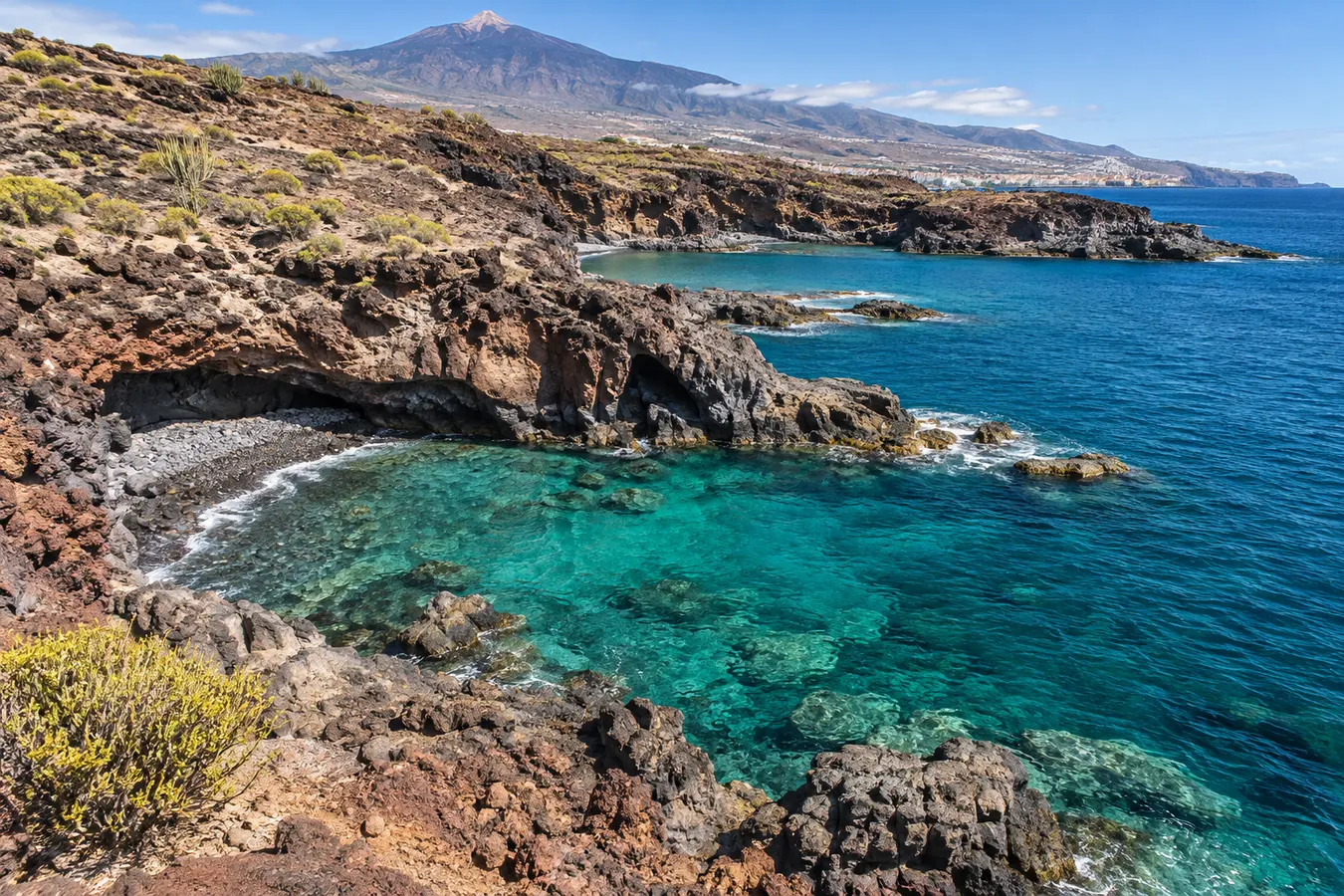
The volcanic landscape of Montaña Amarilla is one of the more unusual features of southern Tenerife. Its rock has shapes and colours that differ considerably from those of a typical resort beach. Below the surface, the relief can continue into an uneven seabed and contrasts of light that explain its popularity with people interested in the underwater environment.
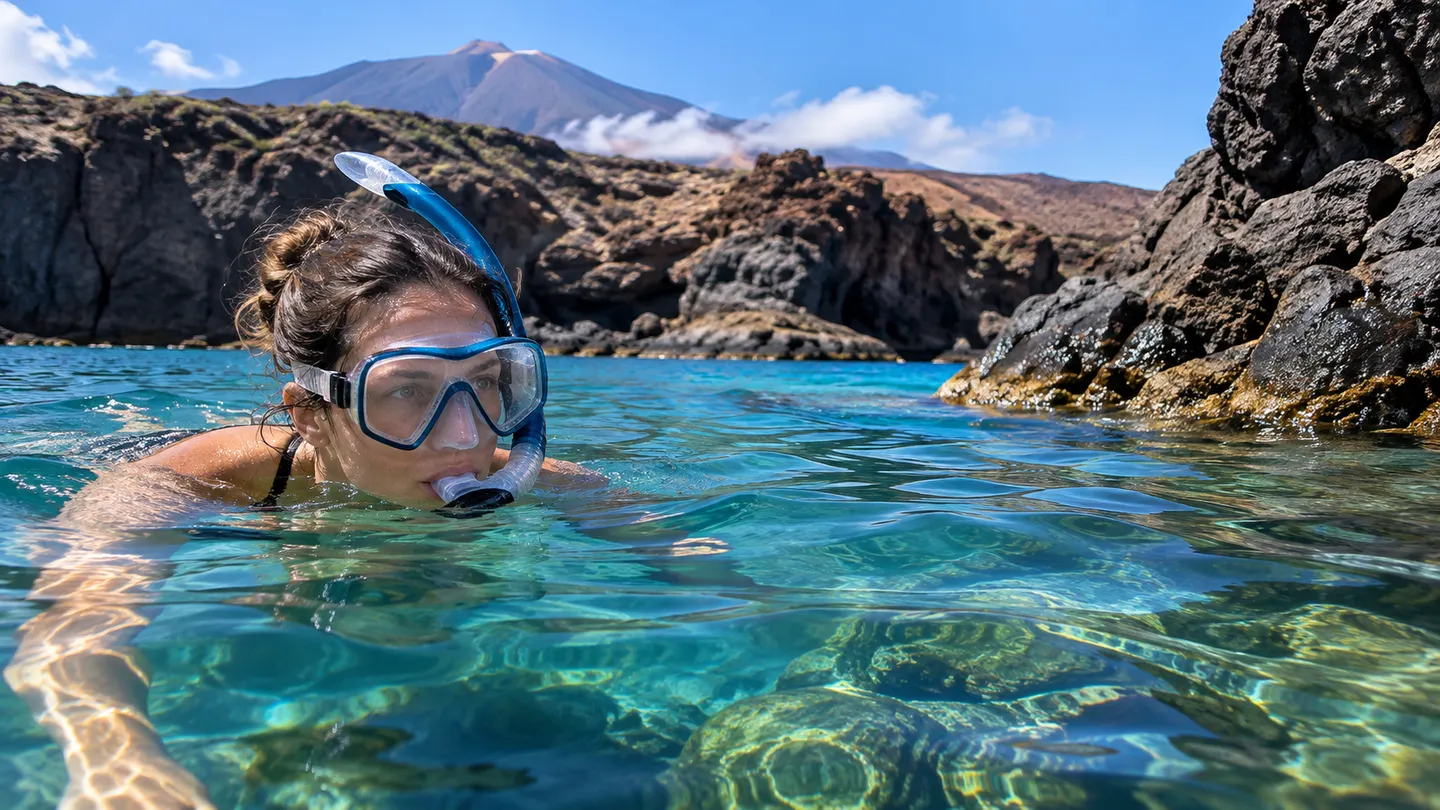
A rocky shoreline, however, is not the same thing as an easily accessible beach. Entries can be awkward, exits few and far between, and waves may break against hard surfaces. Photographs taken on days of calm seas do not necessarily reflect what happens when there is an incoming swell.
Before considering snorkelling, examine the site from land and only consider an activity appropriate to your capabilities and the prevailing conditions, seeking professional guidance if you are unfamiliar with the coast. When the access is unfavourable, the rock formation itself deserves a visit out of the water. There is no need to combine the two experiences in one day.
Alcalá and Tenerife's west coast
Alcalá, in Guía de Isora, combines a small fishing harbour with a network of streets that extends towards La Jaquita. It makes an appealing base for a quiet coastal break, with different places to take a walk or spend time beside the ocean.
Alcalá's small beach can offer opportunities for swimming when the state of the Atlantic allows, but the proximity of the pier makes it necessary to distinguish the areas used by boats. The seabed along the west coast can offer glimpses of fish between rocks and vegetation. This does not mean you should try to explore every bend in the coast from the water.
If you want to see more of the area, combine a possible short session with a walk towards La Jaquita. You will be able to see the terrain from different vantage points and form an impression of how the waves affect individual sections of the coast. Nearby natural pools also require attention to local notices; they are not enclosed against the ocean.
What about the north coast and Anaga?
The north and north-eastern end of the island have a different coastline from the one that usually appears in holiday brochures. Ravines descend towards small beaches, rock outcrops and cliffs. In places such as the Puerto de la Cruz coastline and certain beaches of Anaga, the scenery can be beautiful, but the Atlantic may be particularly exposed.
It is not a good idea to choose an isolated spot purely on the strength of a photograph or a review that says the sea is usually calm. On some days, one of the best experiences is to observe the ocean from the promenade or walk on a designated trail without entering the water.
For beginners, it is usually easier to compare beaches with facilities and lifeguards than to explore remote locations. The distance to a safe access point and the availability of help are key factors in making a suitable choice.
Organising several days around snorkelling
If you are staying in the south, you can combine beaches close to the resort centres with a visit to the west coast. If you are on the eastern side of the island, an outing to Abades might fit in with other beach plans. Avoid attempting too many separate sessions in a day: moving between locations and putting on and taking off equipment takes time and energy too.
Pack sun protection for both the water and your time on land, together with a dry layer to wear after your swim. A family travelling with children, for example, will appreciate a beach with toilets, accessible shade and the option of dividing up their activities. Not everyone travelling together needs to snorkel simultaneously.
Finally, leave some room for surprises. The place with the most eye-catching fish of your entire holiday might be somewhere you have travelled only a few metres on the surface, spending a long time looking at the same patch of seabed. Instead of collecting visited beaches, notice what makes each section of the coast different. It is an excellent way to get to know the island.
Explore next: Snorkelling in Tenerife.