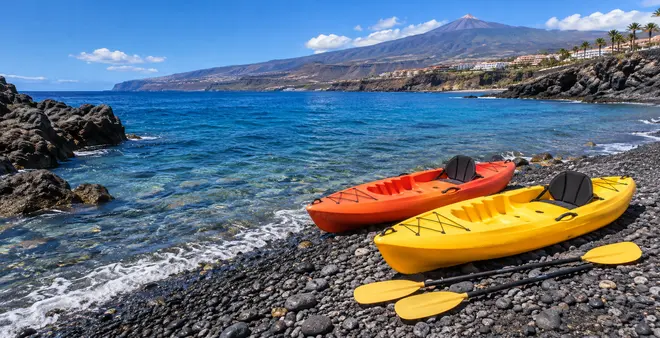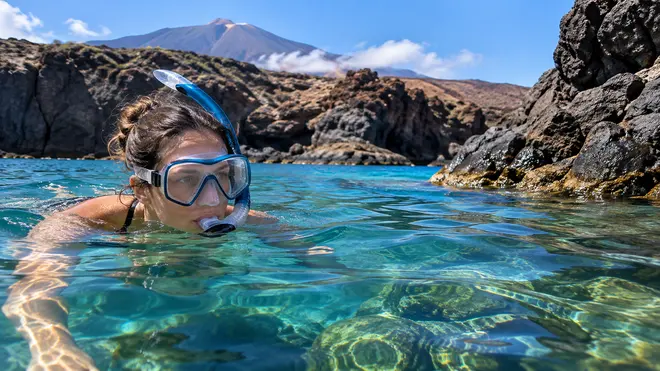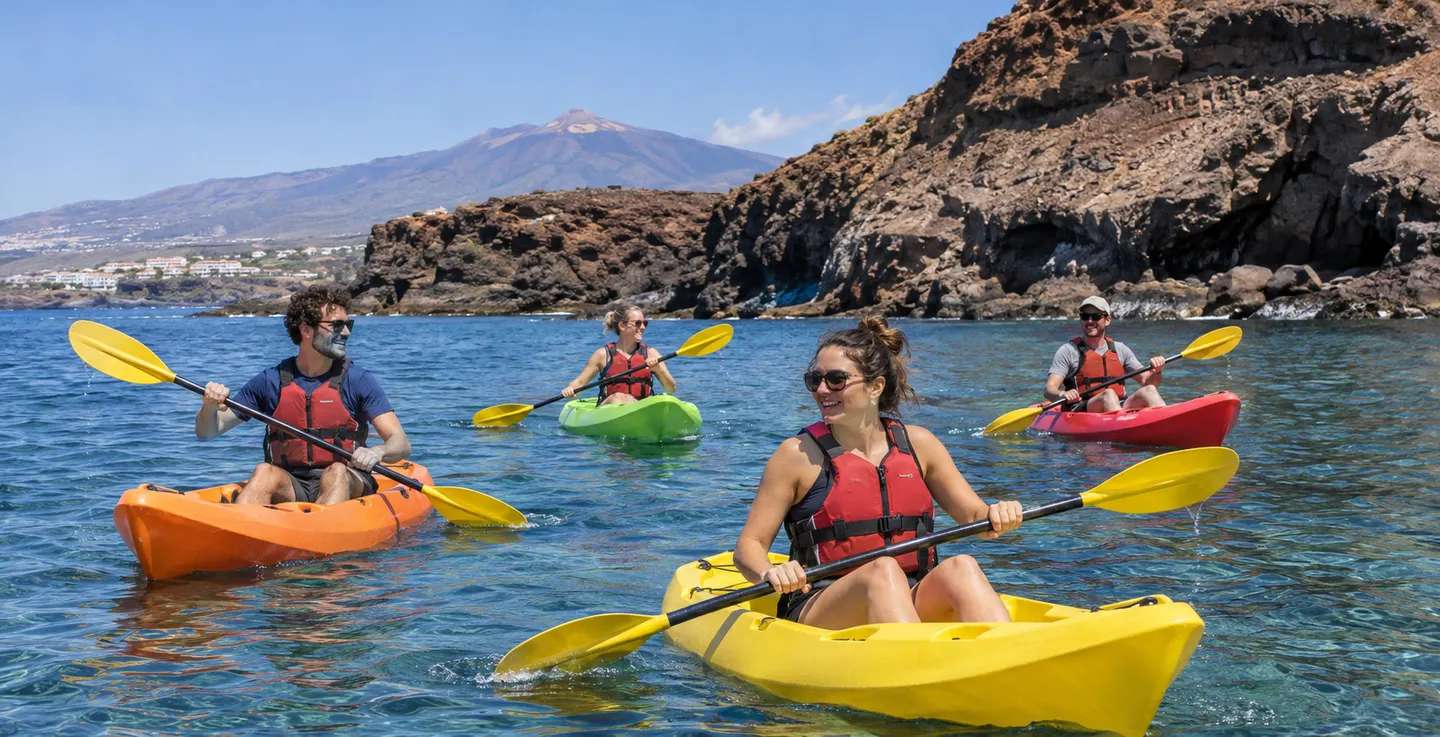
Sitting in a kayak changes the scale of Tenerife. The promenade is suddenly at shoulder height. A small lava headland barely visible from the road becomes the feature that dominates the landscape, and the sound of the town gives way to water tapping against the hull. You do not need to be an accomplished athlete to enjoy that shift in perspective. It is worth beginning with a simple goal, though: learn to handle the boat and return to shore wanting to do it again, rather than cover a particular distance.
The Atlantic is not a swimming pool, and a kayak is not a floating board on which to sit and relax. Before choosing a cove because it looks attractive in a photograph, consider what kind of introductory outing you actually want. The difference between a pleasant experience and an exhausting one often comes down to decisions made long before a paddle touches the water.
Start with your actual ability, not the scenery
Photographs of Los Gigantes are enough to make almost anyone want to paddle. However, a sheer rock wall descending straight into the ocean leaves few opportunities to get out of the water. A bay with a suitable entry and exit, space to practise and favourable conditions offers a different setting altogether. For a first session, ease of landing may matter more than the views.
Several Tenerife towns have established water sports activity. Los Cristianos and Las Galletas are sensible places to find out about introductory sessions in the south; the coast of Santiago del Teide is interesting for its proximity to the enormous cliffs. There are also places associated with kayaking on the northeastern side, including Las Teresitas. None of these is suitable at every hour or in every sea state. Even urban beaches have swimming areas and sectors where you should not be navigating.
An introductory session with a qualified professional familiar with that stretch of coast lets you discover those differences without making them a problem. Ask how much time is given to the explanation on land, what kind of kayak is used, how the activity is adapted to the group and what happens if the wind changes. A short or popular excursion is not automatically a beginner-level activity.
What you can learn before setting off
A good part of the learning begins on dry land. This is the time to find a comfortable sitting position, adjust the foot supports if provided, check your flotation equipment and understand which face of the paddle is meant to move the water. The instructor can also explain how to move alongside the boat at the shore and how to communicate clearly with the person in charge of the session.
There is no need to hurry through this part. Sitting with your back in a natural position, relaxed hands and well-supported legs helps stop you paddling exclusively with your arms. Within a few minutes, it is perfectly normal to find the paddle feels too long, that one side feels clumsier than the other or that the kayak turns when you did not expect it to. These are common learning experiences, not evidence that you are unsuited to the sport.
In a tandem boat, you also need to agree on how to work together. Both paddlers have limited room to move their paddles, and the useful pace is the one both occupants can maintain. A small exercise in calm water under supervision lets you recognise basic instructions before making progress together.
Related reading: Kayak routes on Tenerife's south coast: choosing the right outing.
What to wear for time at sea
Visitors arriving in southern Tenerife in winter often imagine going out in nothing more than swimwear. The air beside a restaurant might feel mild, but exposure changes just a few metres offshore: you get wet, wind encourages heat loss and your hands are constantly working. Suitable clothing is chosen with the water temperature, wind, exertion and possibility of accidental immersion in mind.
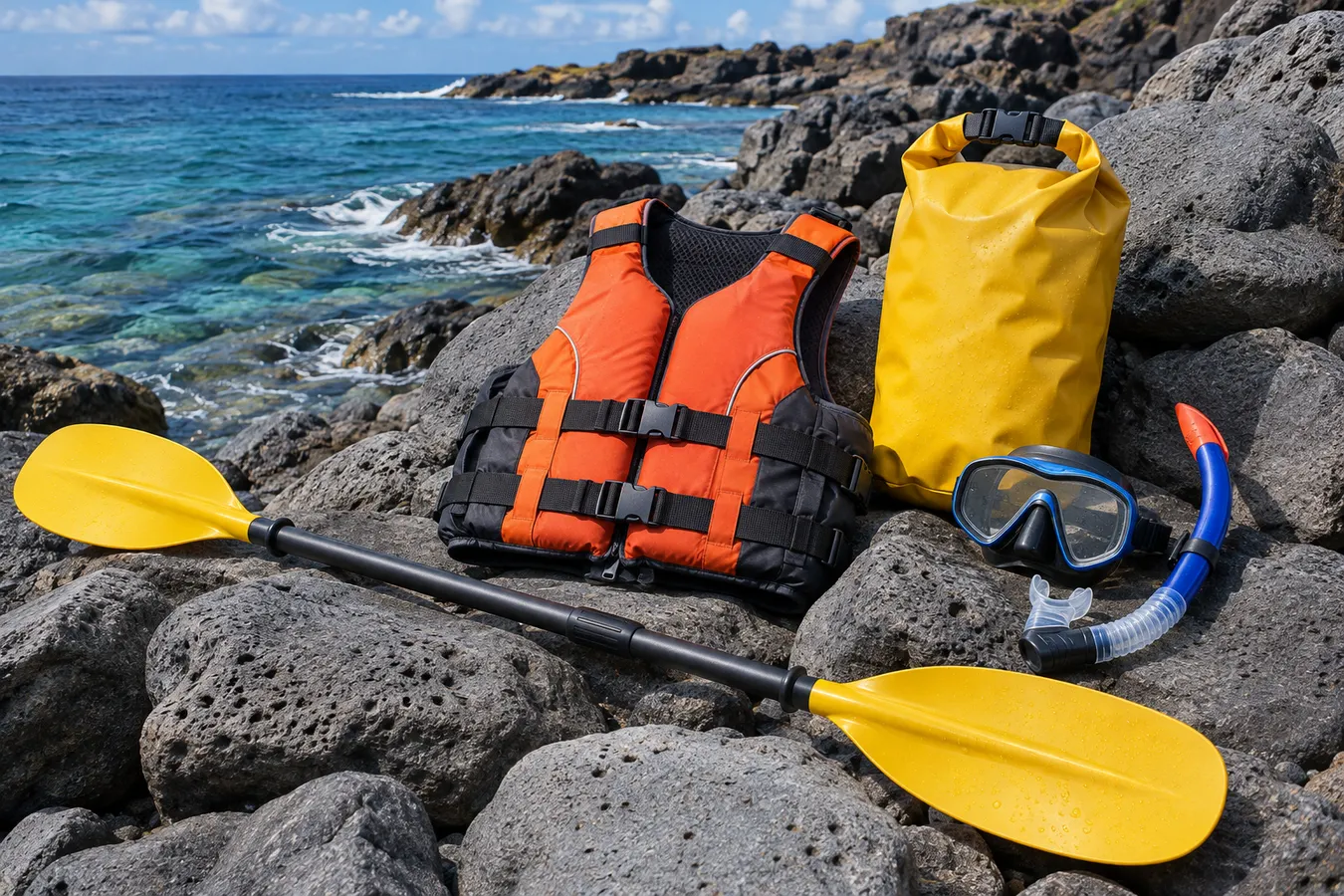
A sun-protective top that allows you to move freely is useful; depending on the season and conditions, you may need additional thermal clothing appropriate to the sport. Footwear should stay on your feet and suit the access point specified by the person running the activity. Going barefoot because one beach looks sandy is not a good choice if you have to enter elsewhere or walk over uneven ground.
Bring water, apply sun protection before setting off and have a change of clothes that will stay dry. Store keys and other belongings in a genuinely waterproof system, agreeing with the guide what can be carried on board. Avoid a heavy walking backpack, loose jewellery or accessories that make leaving the boat more difficult. Appropriate, properly fitted personal flotation equipment is essential, including for people who are excellent swimmers.
Allow an entire morning for learning
Leave some extra time between your arrival at the meeting point and your next holiday activity. If you need to collect a hire car or arrive for lunch at a specific time, you are more likely to rush through the preparation. The assessment of conditions should not be skipped because you have a busy schedule.
A group will typically start with preparation and progressive practice in an area selected by the person responsible for the session. The activity may then involve travelling a short way, stopping and practising turns. There is no universal duration. It depends on what has been arranged, the group's abilities and the circumstances, and the distance may decrease if someone begins to tire.
During the outing, you may discover that the small details interest you more than the kilometres covered: the changing colours of the water, the marks tides have left on the rocks or the sensation of passing alongside a shoreline without looking over a railing. Enjoy them without losing track of instructions or the rest of your group.
Wind, swell and being willing to stay ashore
A forecast for sunshine is not a marine forecast. Tenerife's mountainous landscape affects the wind, and coastlines facing different directions experience different conditions. A day that is workable in one location might not be suitable in another, and a sea that looks comfortable early in the morning can become less so later on. Decisions require a full assessment of the forecast and conditions as observed on the day.
For a newcomer, signs seen from the beach cannot replace the judgement of someone suitably qualified. Waves breaking against the shoreline, offshore winds and significant boat traffic are among the factors that must be examined. Do not treat a cancellation or change of location as something to negotiate. Having a fallback plan to spend the morning walking the coast takes unnecessary pressure off the decision.
How you feel also matters. If you have slept badly, have pain, experience motion sickness or feel uncomfortable in the water, tell the person leading the activity beforehand. Knowing your limitations and being able to swim are different things: feeling at home in the water can give you confidence, but you also need to understand the risks of a small craft at sea.
What if you see marine wildlife?
The waters around Tenerife are part of a particularly valuable natural environment. You might observe fish near the seabed, seabirds overhead and, occasionally, other animals. Wildlife appearances are unpredictable, however, and certain conservation areas have specific rules. An introduction to kayaking need not turn into a search for animals.
If you see something interesting, communicate it to the person in charge and follow their instructions. Do not leave the group to take a picture, or chase, block, feed or touch animals. Travelling by kayak is an opportunity to appreciate natural places without deliberately interfering with the life within them. Never assume you are allowed to approach the vegetation or rock faces of any part of the coast.
Afterwards: think about sensations rather than results
Once on land, change out of wet clothing, drink water and give yourself a short rest. Tired shoulders or forearms may indicate that you have been holding the paddle too tightly. When speaking to the person who accompanied you, explain which movement you found difficult, when you lost coordination or whether you would like to work on turns. These observations can help you choose your next session more sensibly.
Getting a good start does not mean mastering the sea at the first attempt. It means beginning to understand how a small boat behaves, learning to listen and recognising when you need assistance. Leave longer or more demanding trips until you have the preparation for them. The coast is not going to move: there will be other mornings to explore it with greater confidence.
Explore next: Kayaking tours in Tenerife.