Drawing a kayak route around Tenerife is as easy as opening a map and following the coastline with a finger. Actually completing it means interpreting many details that the map cannot show: the size of waves breaking against a jetty, possible landing locations, currents, wind direction in relation to the boat's course, harbour channels and protected areas. In the south, the character of the scenery also changes considerably over a few kilometres.
This guide describes several stretches of shore from the perspective of someone who wants to experience the coast by kayak. It is not a set of instructions for independent navigation. Every outing requires its own plan, permission where applicable and an up-to-date assessment by someone with the necessary expertise. A popular route is not a route that is available at all times.
Los Gigantes to Puerto de Santiago: the vertical coast
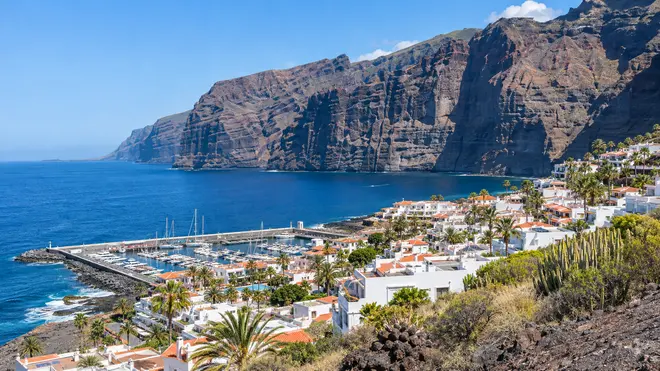
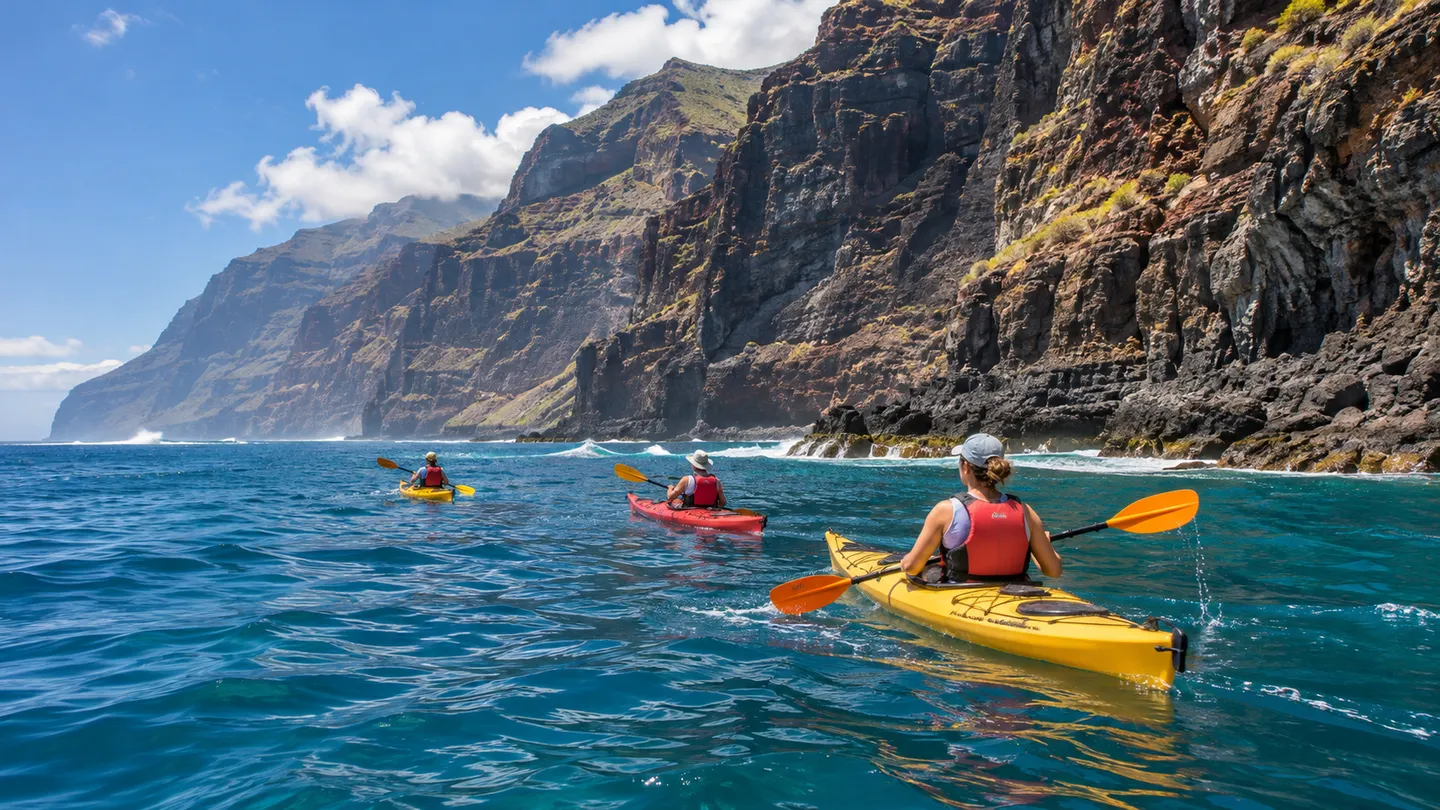
One of western Tenerife's most recognisable sights is the dark rock face of the Teno massif. Near Los Gigantes, the dramatic profiles contrast with the flat beaches of municipalities further south. A succession of inlets and protruding sections resembles an enormous sculpture, particularly from water level, where the actual scale is difficult to judge without a boat in view.
It is a complex environment that deserves respect. The bases of the cliffs are not convenient landing places, rockfalls can occur and waves may be reflected by the rock. There are also conservation measures to protect the wildlife living on the cliffs. Recommendations to maintain a considerable distance from the coastal cliff front protect both birds and people using the water. Check the restrictions in effect before making plans for an activity.
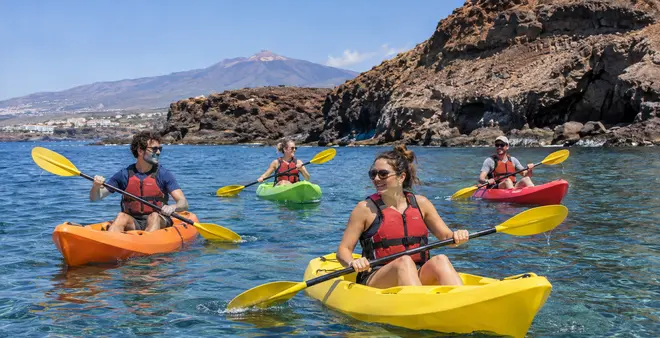
An organised outing suited to the conditions can be a good way to view this scenery from a different position. If you are a beginner, establish whether your proposed activity includes time and space to learn the basics, or heads straight into an exposed stretch. The description 'cliff route' can cover very different experiences.
On land, nearby Puerto de Santiago and Playa de la Arena provide alternatives for taking a break, walking or enjoying the scenery without extending a physical activity. It is convenient to stay in the area for several days instead of trying to arrange your visit around one fixed afternoon.
Playa San Juan and Alcalá: small coastal towns
In the municipality of Guía de Isora there are coastal towns with residential-scale streets, small beaches and promenades overlooking the shore. Alcalá has the appeal of an old fishing community, and Playa San Juan combines a beach and harbour with everyday village life. Visitors who prefer to sleep somewhere other than a large resort have interesting options here.
The coastline alternates between rocky surfaces, developed areas and protective structures. You cannot assume that water within the shelter of those structures offers authorised access or a suitable place to navigate. There are boating activities, bathing areas and designated boundaries to respect. If considering a kayak outing in the area, find out exactly where the departure is intended to take place and what alternatives are available should sea conditions prove unsuitable.
Related reading: Your first sea kayaking experience in Tenerife: how to prepare.
This part of Tenerife is less focused on a single photographic landmark than Los Gigantes. A quiet outing allows time to notice small variations: different colours in the rock, the hills inland and the outline of La Gomera on days with good visibility. These are details appreciated by people who have already learned to paddle without constantly watching their own hands.
Costa Adeje: beaches, services and protected coastal waters
Costa Adeje's concentration of accommodation and beaches makes it easy to arrange a holiday without a great deal of travelling. It also means a lot of competing uses of the water. There are busy beaches, personal watercraft, leisure boats and areas in which bathers take priority. Routes must stay clear of sectors where navigation is incompatible with these activities.
Around El Puertito, the landscape is more intimate than around the major hotel developments. The contrast between a little cove and the open ocean is striking. Popularity does not remove the constraints of a small place: the more swimmers and water sports participants arrive, the less room there is to manoeuvre. Respect for the setting must take precedence over looking for a position where you can stop to take a picture or get into the water.
The Teno-Rasca marine strip is within a designated conservation area containing sensitive habitats and species. If someone proposes a kayaking outing to look for wildlife, ask about the protocols and any permissions required. Seeing an animal must not become a reason to pursue it. The seabed should not be touched or used for landing either.
Los Cristianos and the area around Palm-Mar
Arona is an established reference point for kayaking in southern Tenerife. Los Cristianos has an urban beach and a port serving passenger vessels. The accessibility of the town can give the impression that navigation will be simple, but it is precisely this movement of large and small boats that demands particular attention. The harbour entrance and exit are not a practice area.
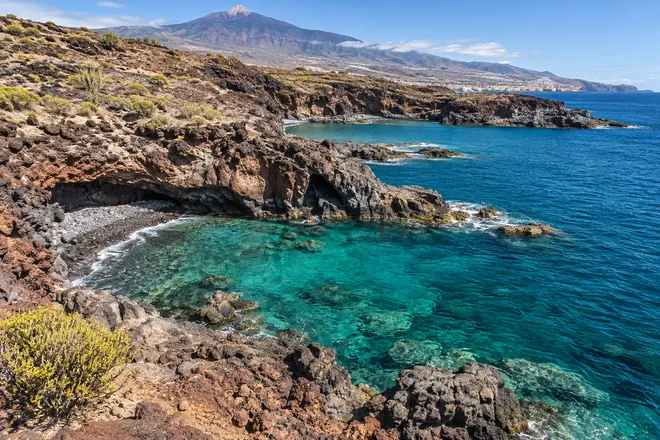
The character of the scenery changes in the direction of Palm-Mar. The surroundings become more arid, with rock, slopes and small coastal areas. Any outing in this section requires careful consideration of wind direction, possible landings and environmental restrictions. It is not enough to identify a route from the land: coastal footpaths do not necessarily correspond to places where someone can find refuge from the sea.
Beginners will find a variety of proposals for introductory activities in this municipality, but the name of an activity does not indicate its difficulty. Ask for a description of the terrain and actual time spent paddling instead of focusing exclusively on the advertised overall duration. Preparation, stops and waiting can take up a significant portion of the schedule.
Las Galletas and Costa del Silencio
Further east, Las Galletas retains the look of a fishing town, with harbour facilities and buildings close to the water. The surrounding coast has volcanic rock surfaces, and Montaña Amarilla is a good example of a location worth visiting for its geological formations. You do not have to undertake a continuous kayaking trip between the two towns in order to visit them both.
Changes in coastline orientation affect waves and wind. A seemingly sheltered sector may become difficult to leave if you have to pass an exposed area on the way back. Departure and landing points need to be identified much more precisely than by the general name of a beach or town.
The area is interesting for travellers looking to alternate walking, photography of volcanic formations and water activities. If conditions prevent paddling, you can rearrange your holiday without giving up the visit to this part of the south.
The 'ideal' route is not measured in kilometres
A distance may look small on a screen, but actual time on the water depends on the pace of every participant, the conditions and the shape of the shore. Unlike a walk on land, there is not always a shortcut at sea. An agreed turnaround point and conditions under which to call off the activity are part of serious planning.
Consider four questions before choosing a location. Is this a first lesson or a journey intended for experienced paddlers? Are there suitable ways to return if conditions change? Is the proposed itinerary compatible with maritime traffic and applicable environmental restrictions? What alternative will we have if it is not sensible to enter the water?
On a week away, it can be more rewarding to visit two stretches of coast with different characteristics than to try to connect them by paddling. A morning around Los Gigantes emphasises vertical landscape; a day in Las Galletas reveals another relationship between town and sea. There is no need to tackle the entire coastline in a single outing to appreciate the variety of southern Tenerife.
Explore next: Kayaking tours in Tenerife.