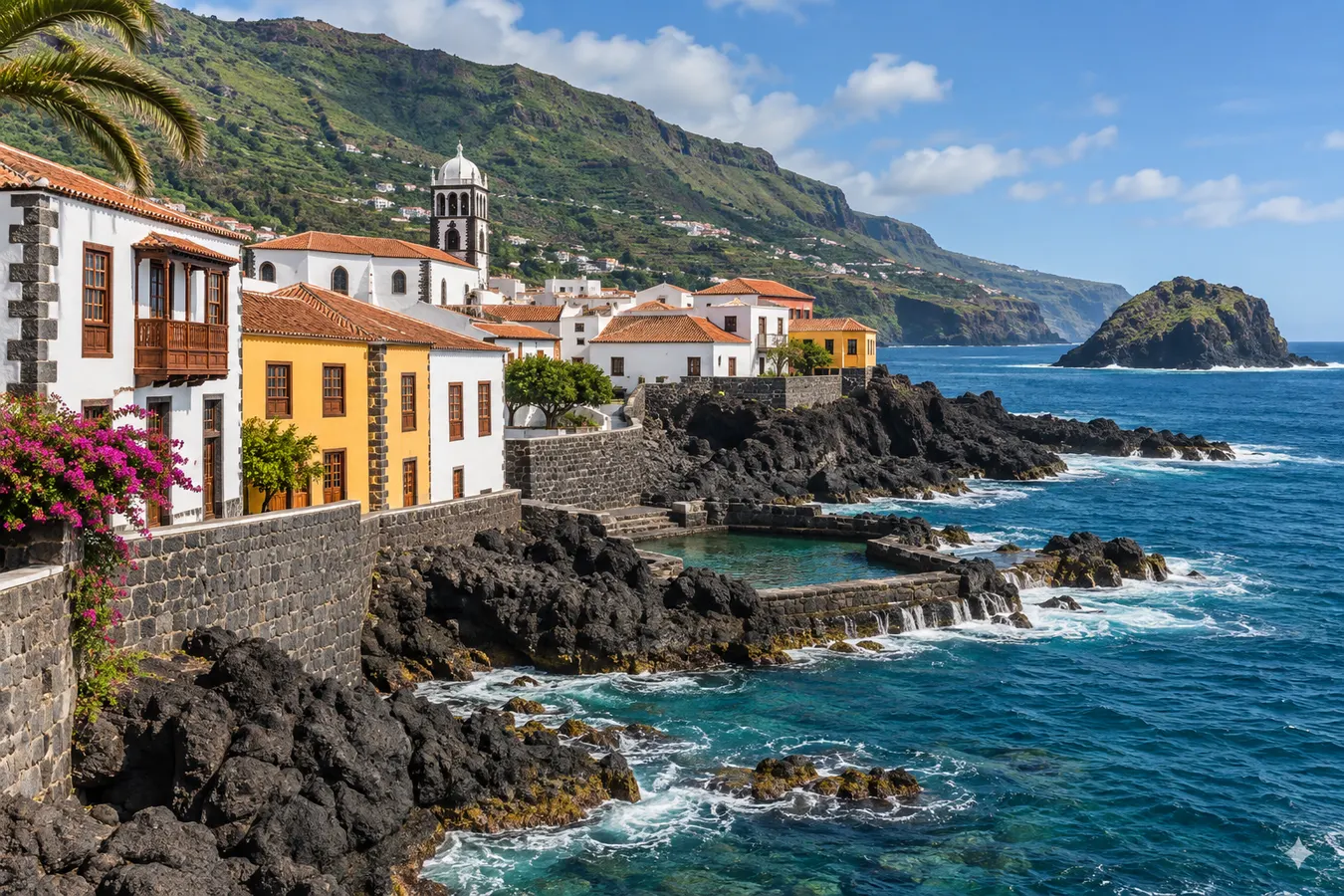
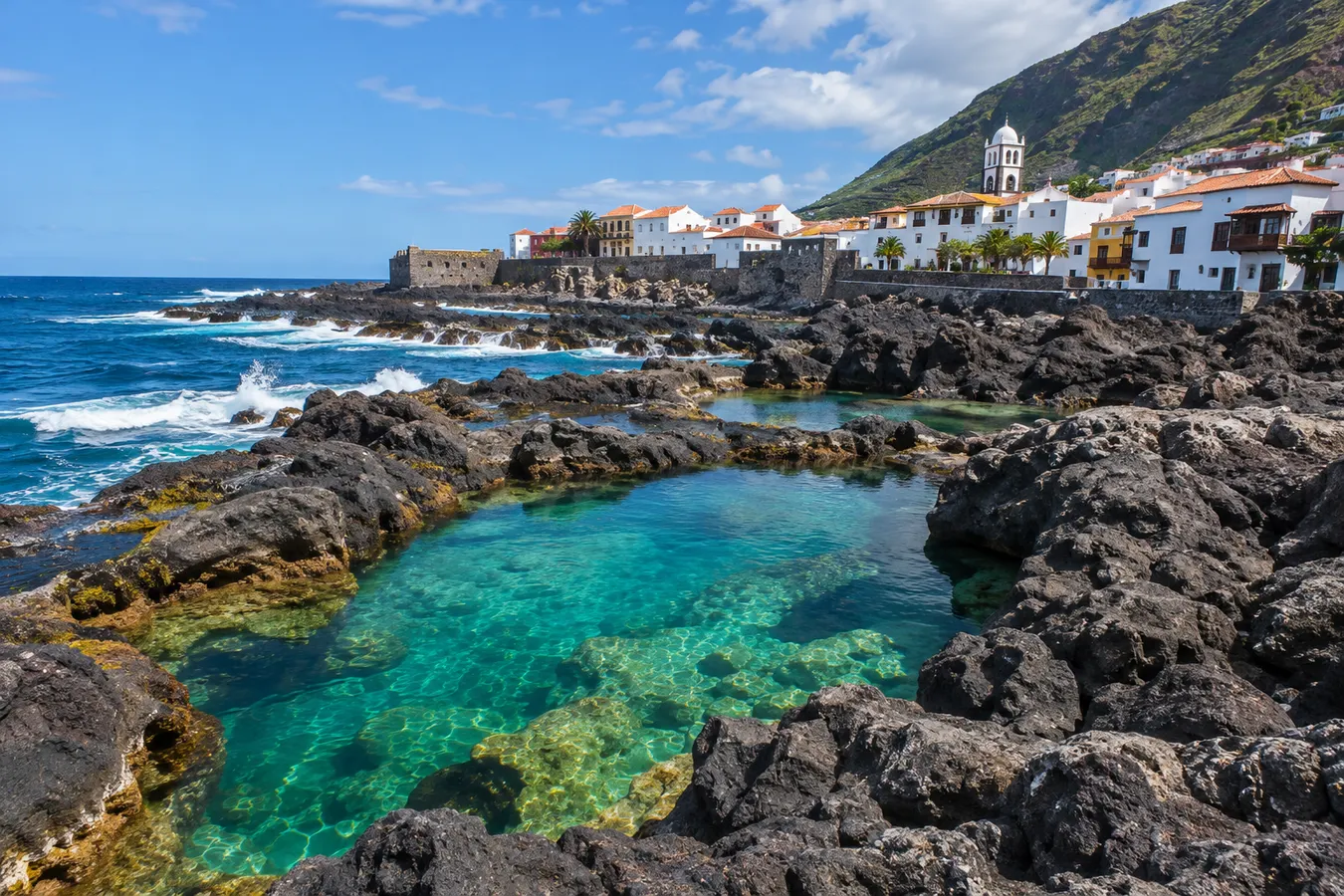
Garachico's natural pools immediately draw the eye from the road following the coast. On one side, water enters between projections of dark rock; on the other, the façades of a town with its characteristic tiled roofs. Between them stands the Castle of San Miguel. This contrast sums up a considerable part of Garachico’s history.
Before lava reached the sea in 1706, the shore looked different and fulfilled a different economic function. Garachico was one of Tenerife's foremost ports. Today, the places that help us imagine this former activity are not found solely beneath the water's surface. They survive in the street layout, the buildings that escaped destruction and the transformations of the land itself.
When a volcano changed the coastline
The eruption of the Arenas Negras volcano, also referred to as Trevejo or Montaña Negra in descriptions of this episode, began in May 1706. Lava descended the hillside towards Garachico and reached the sea. It affected buildings and the harbour area, as well as altering the line separating land and water.
On an island where trade depended heavily on shipping, the loss of the conditions that made the harbour useful had consequences extending well beyond the immediate physical damage. Other towns grew in importance as ports. Garachico, however, continued to be inhabited.
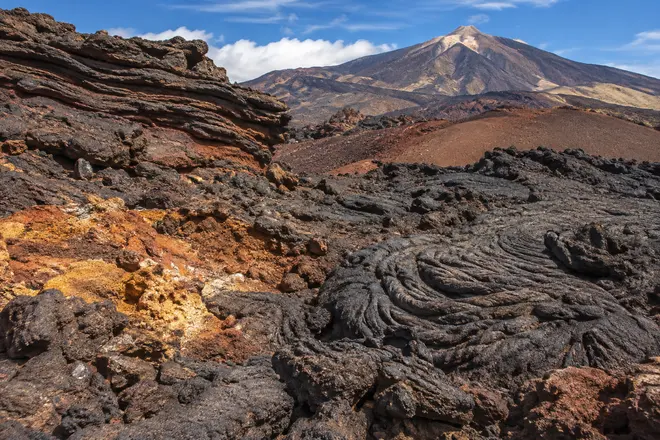
Looking at the present-day landscape, it is not always easy to identify the extent of the transformation. Some of the surfaces you walk on consist of materials deposited during the eruption, and the town continued to develop between affected areas and others that were relatively untouched.
The story should not be reduced to the idea that the entire original town disappeared beneath the lava. Particular buildings survived and now provide points of reference for understanding how the area was organised before its shoreline changed.
Puerta de Tierra and the memory of the old port
The park of Puerta de Tierra preserves a particularly useful landmark for imagining the relationship between the town and its port. It now lies within the urban area, a curious position until you appreciate just how much the coastline has changed.
The site provides the beginning of a historical visit without requiring a lengthy explanation. Compare the location of this old gateway with the present waterline and consider how goods and people might have travelled between the harbour and the streets. Elsewhere in the town there are houses and religious buildings connected with its development.
Plaza de la Libertad is a useful place to pause and get your bearings. Around it are architectural landmarks of the historic centre, including religious buildings and structures from various periods. From here you can readily extend your visit along nearby streets without losing sight of the comparatively small scale of the town.
Related reading: La Orotava on foot: balconies, gardens and routes between the valley and Teide.
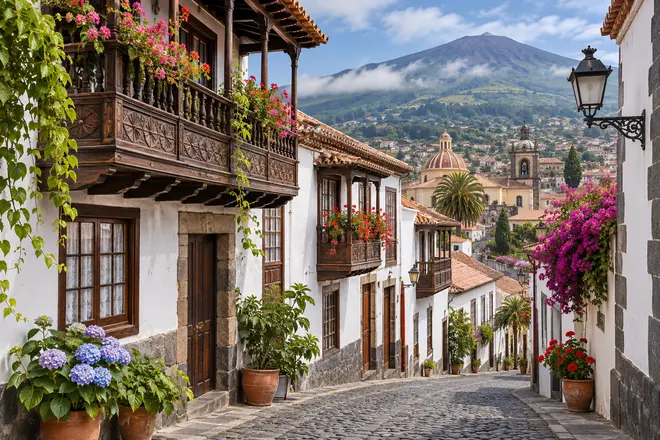
The façades are as interesting as the main squares. Cut stone features, wooden balconies, courtyards and doorways illustrate traditional construction methods. Avoid treating residential streets as empty scenery: Garachico has an everyday life quite independent of its visitors.
The castle at the edge of the lava
The Castle of San Miguel is recognisable by its compact outline beside the natural pools. It was built in the sixteenth century for a defensive purpose associated with the harbour and is one of the surviving examples of military architecture from that period.
Its position is particularly interesting because it connects the present landscape with the shore before the eruption. Nearby are the irregular shapes of El Caletón, resulting from the interaction of volcanic materials and ocean water.
The castle provides a human-sized point of reference. The tongues of rock around the water are not an abstract backdrop: they illustrate the way a geological event changed the conditions that had once made the defence of the harbour necessary.
On days of heavy Atlantic swell, waves can break over the rocky areas. The permitted sections of the seafront provide a good perspective without the need to approach wet edges or enter closed facilities.
El Caletón: water between irregular rock surfaces
El Caletón consists of volcanic pools and channels adapted for bathing. When conditions are suitable, the lava surfaces partially separate the water from areas of direct wave action. Looking down, you can make out differences in depth and the various shapes of the pool edges.
The expression natural pool might suggest an enclosure unaffected by the outside world. In reality, the water at El Caletón is connected with the ocean, and its characteristics depend on tides, waves and sea state.
Do not enter when the area is closed or waves are breaking forcefully over the edges. Wet surfaces can be slippery, and the edges of the rocks do not possess the regularity of a conventional swimming pool. Follow any instructions from the lifeguards when they are on duty.
In suitable conditions, it is interesting to observe how the light in the water changes as you approach a dark surface. Volcanic rock absorbs much of the light, and reflections may make nearby areas seem to have different depths. This also means that you should not judge depth by sight alone when considering jumping in.
For anyone interested in snorkelling, a pool adapted for bathing is not automatically a place to explore without limitations. Visibility, exits, the presence of other swimmers and restrictions are all relevant. Saving your equipment for another location may be the best option if any of those factors is unfavourable.
Roque de Garachico and a view of the coast from above
Off the coast rises Roque de Garachico, a rock formation separated from the mainland. Its profile is a characteristic element of views of the town, especially when it appears alongside the houses and inland mountains.
The rock lies within a protected natural area; appreciate it from accessible points along the shore rather than attempting to reach it independently. Currents, swell and the absence of a suitable landing area are additional reasons not to approach it outside an authorised activity.
The upper part of the surrounding area provides extensive views over the town and the coast. These vantage points make it easier to identify the slope down which the lava travelled. The route connecting San Juan del Reparo with Garachico follows a landscape marked by deposits from the eruption. As with any hillside walking route, check access conditions and account for the elevation change and arrangements for returning.
A day on foot in Isla Baja
Garachico lies in the area known as Isla Baja, alongside neighbouring municipalities such as Los Silos, Buenavista and El Tanque. One advantage of staying in this part of Tenerife is having time to explore smaller coastal towns and travel into the Teno mountains on other days.
It is worth starting with a walk through the old town before approaching the sea. If El Caletón is open and the water conditions are suitable, you can devote part of the day to bathing. In other conditions, the scenery of the lava flows and the castle remains interesting without setting foot in the ocean.
Days dedicated to kayaking in the west or other water sports involve different arrangements. Garachico offers a chance to take a break from those activities without abandoning an interest in the coast. Here, within a few hundred metres, you can walk from a gateway associated with the old harbour to a surface of lava washed by Atlantic waves. That proximity between urban history and volcanic terrain explains the town's enduring character.
Explore next: Kayaking in Los Gigantes.