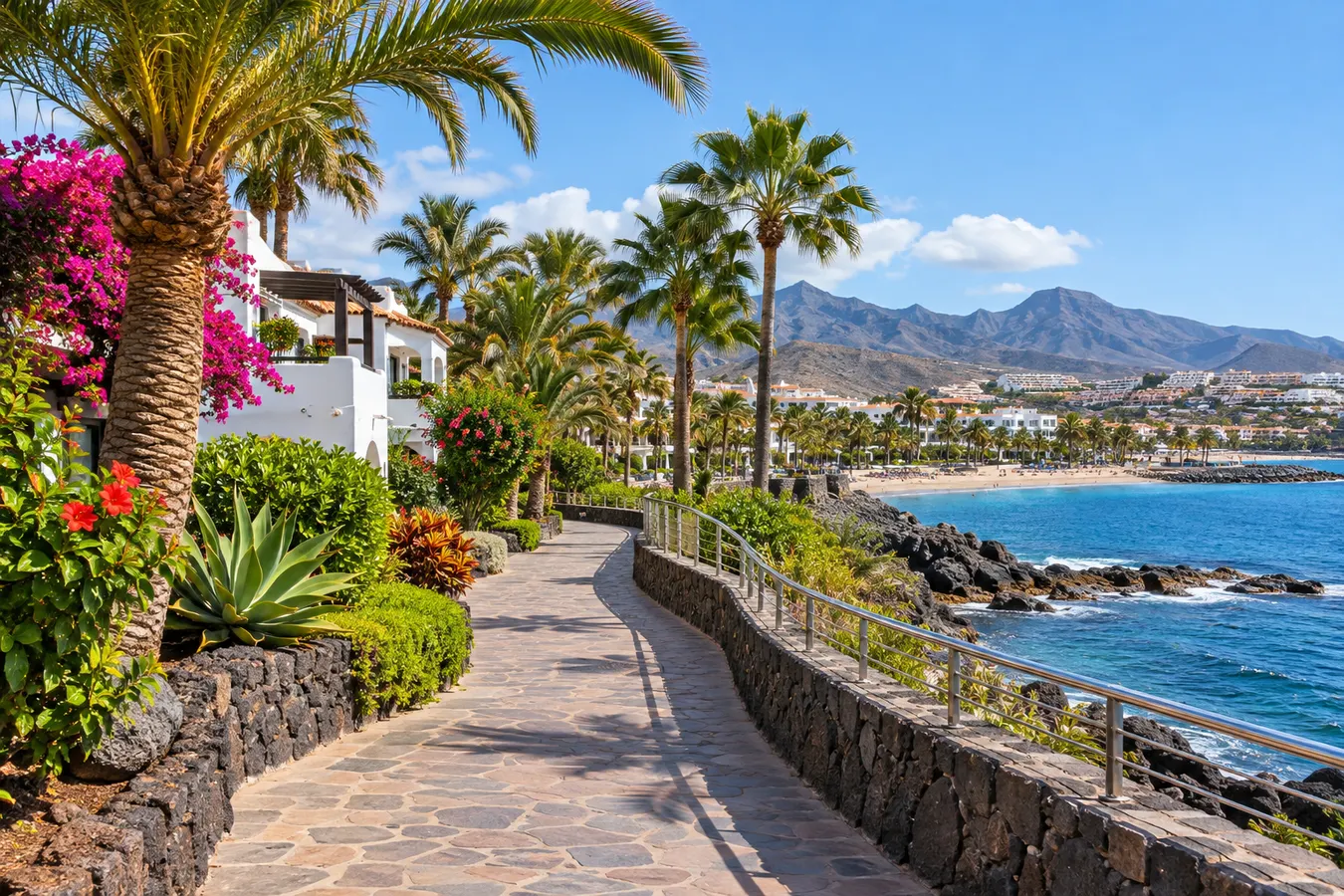
Playa del Duque lies on one of the most developed stretches of coast in Adeje, between two sections of shoreline where you can walk for quite a while without moving far from the ocean. The beach itself is considerably shorter than Fañabé, so a change of scenery involves little more than following the promenade. Within a few minutes, you encounter small rocky points, patches of sand, gardens and terraces set back from the water at different levels. This area is often associated with restorative holidays, but there is no need to confine yourself to the sand immediately in front of your accommodation. Walking a few kilometres reveals the variety of the shoreline.
The character of El Duque
The beach occupies a cove of pale sand, with access from the surrounding hotel district. Among the facilities in the area are showers, toilets and sun-lounger hire, along with numerous places to rest or eat. These attributes make it a reasonable choice for a group whose members have different preferences. While one person wants to walk beside the water, another can remain somewhere comfortable. On a day when the waves make bathing inadvisable, the appeal of the surroundings does not disappear. You can spend the morning along the seafront and in its gardens, without venturing onto wet rocks outside the established access areas.
In southern Tenerife, temperatures often allow people to enjoy the coast throughout much of the year. The actual conditions at the beach, however, depend on weather and sea conditions that are not necessarily apparent when you sit on a warm terrace. Clear skies are no indication that swimming is appropriate. At El Duque, check the flag in the bathing area and ask any lifeguards on duty before trying an activity in the water. Official signs and instructions remain the relevant point of reference even if some other bathers appear not to pay any attention to them.
With so much built development around El Duque, the beach might seem uninteresting from a natural perspective. Look inland and you are reminded that this is the western slope of a substantial volcanic island, with ravines descending from elevations far beyond the narrow coastal strip. Rocky promontories and variations in the colour of the water close to land form part of this landscape. If the aim is to explore a little more of the rocky coastline, continuing towards La Caleta reveals a gradual shift in both the scale of development and the character of the shore.
Towards Fañabé and Torviscas along the promenade
An outing from El Duque in the direction of Fañabé takes in two of the best-known beaches of Costa Adeje. The promenade offers a more interesting route than following the inland streets, although it is not always at the same level as the sand. You will encounter stretches with steps or inclines. Anyone needing a route without these obstacles should check for suitable alternatives via the streets further inland. Use the pedestrian areas rather than taking a short cut through coastal maintenance areas or along slippery rock defences. There is plenty to see without leaving the established walking routes.
Related reading: Las Teresitas beach: a morning by the sea near Santa Cruz.
Fañabé is a considerably longer beach than El Duque. In practice it joins up with Torviscas in a stretch of coastline with plenty of businesses open to the public and places dedicated to recreation. You notice an increase in activity on the promenade and the sand, particularly as the day progresses. If you are hoping to try a new water sport with professional assistance, establish beforehand which authorised opportunities are available and whether they are suited to each participant's ability. Seeing people doing one activity does not imply that every other form of water recreation may be practised in the same space.
There are options to continue the walk past other beaches and small marinas in Adeje. If the object is to have an enjoyable visit, though, there is no need to complete an excessively long return journey. Pausing to look out to sea, finding a bite to eat in Fañabé and walking back along the promenade at an entirely different speed makes a fairly full morning. The coastal itinerary offers few obstacles to rearranging your timings. Access to the inland streets also makes it easier to find transport when you no longer feel like walking, an option seldom available along the island's more remote footpaths.
La Caleta: towards a less developed shore
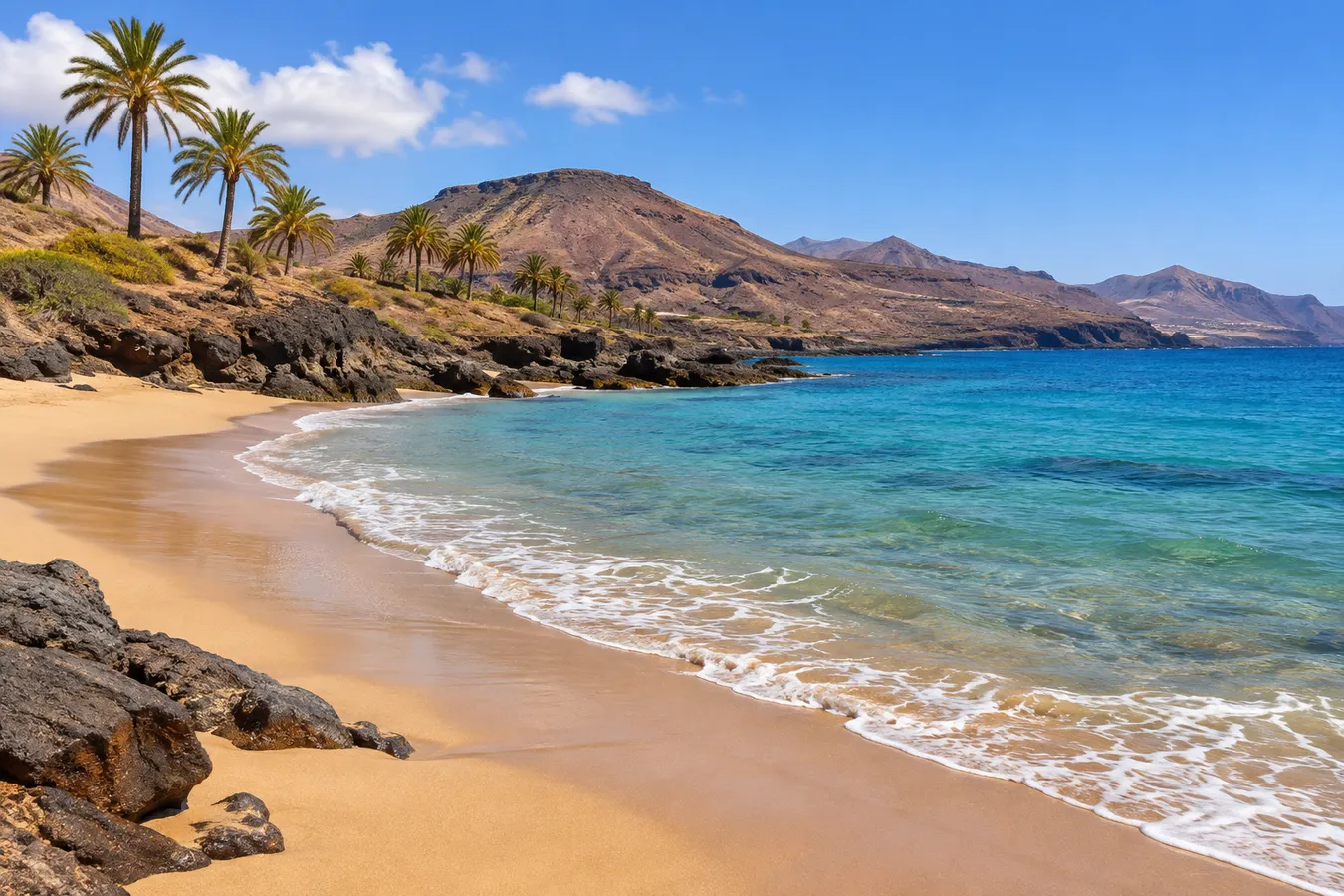
In the opposite direction, La Caleta retains the scale of a small seaside village, with houses around a bay traditionally associated with fishing. The walk towards this area offers views of a landscape where dwellings alternate with small beaches and outcrops of volcanic rock. Around La Caleta, the approaches to the sea are not comparable with those at El Duque. The mere existence of a flat area of rock beside the water does not make it suitable for entering the sea, still less when water is breaking over it or it is wet. The appeal of the visit is also in the numerous opportunities to observe the coast from land.
On arrival in the village, it is worth pausing to look at the arrangement of the buildings and the open views across the Atlantic. After exploring the busier tourist areas of Costa Adeje, the change of atmosphere is a reminder that the coastal settlements did not all develop at the same time or for the same reasons. Stopping for a meal in La Caleta makes an excellent way to end the outing. There is no need to continue onto more difficult stretches of the shore to appreciate this contrast. Any further excursions into protected areas and natural walking routes require separate planning and respect for current access restrictions.
Choosing a time to walk
You can enjoy the promenade before breakfast, in mid-morning or at the end of the day, but each has its different appeal. The early hours are especially pleasant for an unhurried walk, before many businesses are open and the beach areas fill. In the afternoon there are often more pedestrians and it is easy to combine exercise with a lengthy break. On a warm day, the sections without shade can become tiring. Carrying water and looking for places to pause along the way proves much more useful than setting a rigid timetable for visiting every beach.
On days when there is a particularly noticeable breeze, a light extra layer is worth carrying for your rest stops. The difference between walking in sunshine and sitting directly beside the ocean can be considerable, particularly in damp clothes after a swim. Light but supportive shoes work well on the paved sections and changing surfaces. Beach sandals are only comfortable for part of a longer outing. If you are intending to cover a considerable distance, leave bulky bags at your accommodation and bring a small backpack instead, with the essentials for the day and a little space for anything you pick up along the way.
Accommodation for a holiday combining rest and activity
Places to stay around El Duque are often fairly close to the promenade, but the difference in elevation between the inland roads and beach can affect your journeys every day. When choosing a base, look at the actual walking route as opposed to the distance as the crow flies. Fañabé and Torviscas offer a different sort of proximity to seaside activities. Anyone intending to combine an active holiday with outings to other parts of Tenerife also needs to consider ease of travelling further afield. Staying in Costa Adeje does not oblige you to spend your entire trip along the same strip of shore, although having an appealing and accessible seafront on your return is pleasant after a long day of exploring the island.
Explore next: Kayaking and snorkelling in Tenerife.